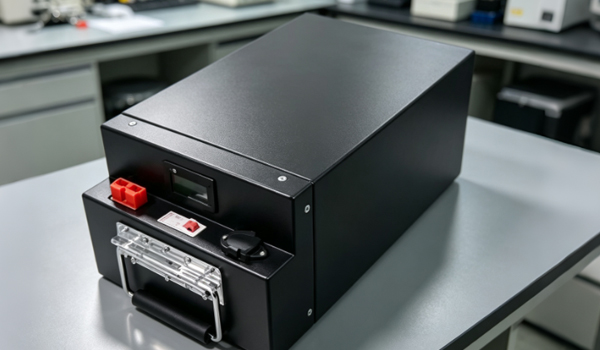
As industrial drones are increasingly used for power inspection, surveying and mapping, logistics transportation, and emergency operations, batteries have evolved from simply supplying power to continuously supporting flight missions. Payload weight, flight distance, air temperature, wind conditions, and the number of daily flights can all affect actual power consumption. For procurement and project deployment, rated capacity alone is not enough to determine whether a battery can meet long-term operating needs. Power output, weight control, temperature adaptability, and energy replenishment efficiency also need to be considered together.
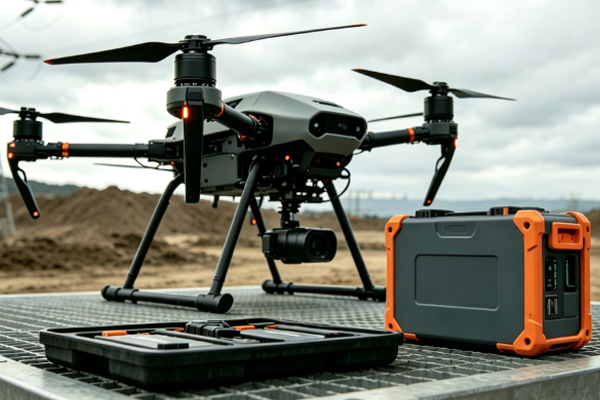
Matching Cells and Battery Capacity to Industrial Operating Requirements
Industrial drone missions vary in intensity, so cell selection and capacity configuration should not follow exactly the same criteria. The appropriate parameter range needs to be determined according to specific flight tasks.
Cell Performance Needs to Adapt to Different Flight Loads
Cell selection can be evaluated from the following aspects:
- High-rate cells are suitable for drones carrying heavy payloads, performing sustained climbs, or experiencing significant power fluctuations. Continuous discharge capability and temperature rise need particular attention.
- High-energy-density cells are suitable for applications with demanding flight-time requirements and strict battery weight limitations.
- High-cycle-life cells are more suitable for equipment performing multiple flights every day, helping control long-term replacement frequency.
Cell parameters need to match the power requirements of the entire drone. Focusing solely on capacity or discharge rate may increase design pressure on other components.
Battery Capacity Needs to Be Calculated Based on Real Mission Data
Capacity configuration can take the following operating data into consideration:
- Takeoff weight and mission payload;
- Single-flight duration and route distance;
- Power consumption of the motors, flight controller, communication equipment, and mission payload;
- Power variations during takeoff, hovering, climbing, cruising, and return-to-home stages;
- Environmental conditions such as wind, temperature, and altitude.
Including these factors in the calculation can reduce the additional weight caused by excessive capacity while maintaining a reasonable energy reserve for the return-to-home stage.
High-Load Flights Need to Balance Power Output and Voltage Stability
During fully loaded takeoff, sustained climbing, and flights against the wind, industrial drones can experience significantly higher propulsion power demand. At this stage, cell internal resistance, discharge rate, and operating temperature can all affect terminal voltage. The battery needs to provide continuous output that matches the power requirements of the entire drone.
Different Applications Require Different Battery Priorities
The following configuration directions can help customers compare options during the preliminary planning stage:
| Application Scenario | Battery Focus | Key Factors | Energy Replenishment |
| Power Inspection | Stable output, longer flight time | Flight time, ambient temperature | Continuous replenishment for multiple flights |
| Surveying and Mapping | Energy density, cycle life | Payload weight, mission duration | Fast charging between flights |
| Logistics Transportation | Continuous power, usable capacity | Cargo weight, route distance | High-frequency replenishment |
| Emergency Response | Power reserve, status monitoring | Complex environments, mission continuity | Quick replacement or replenishment |
Different missions place different priorities on battery performance. Specific parameters should also be adjusted according to motor power, flight time, and mission payload.
High-Load Flights Need to Focus on Voltage Stability and Power Reserve
Heavy-payload takeoff, prolonged climbing, and flights against the wind increase battery current demand, making voltage drop more noticeable. The design should focus on continuous discharge capability while using the BMS to monitor current, voltage, temperature, and SOC. High-load flights need sufficient power reserve. When the battery approaches its lower limit or abnormal voltage drop occurs, the BMS can provide feedback to the flight controller, which can then initiate return-to-home or landing according to the safety strategy, meeting the requirements for continuous power during industrial drone operations.
Strengthening Thermal Management and BMS Design in Complex Environments
Industrial drones often operate in outdoor environments without stable indoor conditions. High-temperature exposure, cold weather, and continuous flight cycles can all affect battery performance. Temperature management and status monitoring need to be configured according to actual operating conditions.
Temperature Management Needs to Cover Real Operating Conditions
Different operating conditions can be addressed through corresponding design approaches:
- In high-temperature environments, optimize heat dissipation paths and cell layout to reduce heat accumulation during continuous operation.
- In low-temperature environments, appropriate preheating measures can be configured to improve power output performance under cold conditions.
- For enclosed battery compartments, pay attention to internal heat transfer to reduce localized heat concentration.
- For high-frequency flights, evaluate heat accumulation based on consecutive missions and charging intervals.
Thermal management should cover the complete mission cycle rather than focusing only on the highest temperature during a single flight.
The BMS Needs to Provide Comprehensive Status Monitoring
The BMS can continuously collect key operating data to support battery condition assessment:
- Individual cell voltage and total battery pack voltage;
- Operating current, SOC, and SOH;
- Individual cell temperature and temperature differences between cells;
- Charging, discharging, and abnormal operating conditions;
- Protection information for over-temperature, over-current, short circuits, and other conditions.
Connecting these data with the flight controller allows operators to better understand remaining battery capacity and battery condition, providing data support for mission adjustments and safety response.
Energy Replenishment Efficiency and Long-Term Operating Costs Need to Be Considered Together
The operating efficiency of industrial drones is closely related to battery turnover. For equipment performing multiple flights every day, charging downtime can directly affect work scheduling. Battery procurement needs to consider charging equipment, spare batteries, and maintenance together.
The Charging Solution Needs to Match the Actual Operating Schedule
High-frequency operations can focus on the following factors:
- Time required for a single battery to reach the target charge level;
- Number of batteries that can be charged simultaneously;
- Power configuration of the charging equipment;
- Battery temperature during charging;
- Downtime between two flight missions.
Properly arranging charging equipment and spare batteries can reduce waiting periods and make daily mission scheduling more efficient.
Battery Procurement Should Not Be Based Only on the Price of a Single Battery
Long-term operating costs are also related to cycle life, communication compatibility, charging equipment compatibility, spare-part availability, and maintenance convenience. For large-scale operations, each battery pack can be assigned an identification number and usage record to track cycle count, capacity changes, and abnormal alarms, making inspection, maintenance, and replacement easier to schedule.
The value of an industrial drone battery configuration ultimately needs to be measured by actual operating performance. Procurement teams should extend their evaluation beyond individual missions to the entire operating cycle, considering battery life, energy replenishment schedules, spare battery management, and overall system compatibility. For customers carrying out continuous inspection, surveying, transportation, or emergency missions, a well-matched drone battery configuration can reduce disruptions caused by frequent downtime, support a more stable daily maintenance system, and provide clearer cost and usage references for future large-scale deployment.