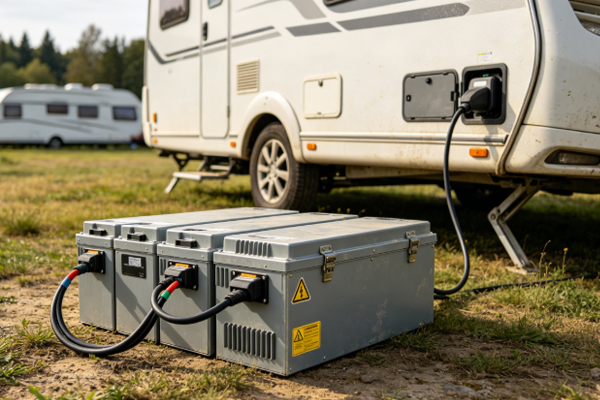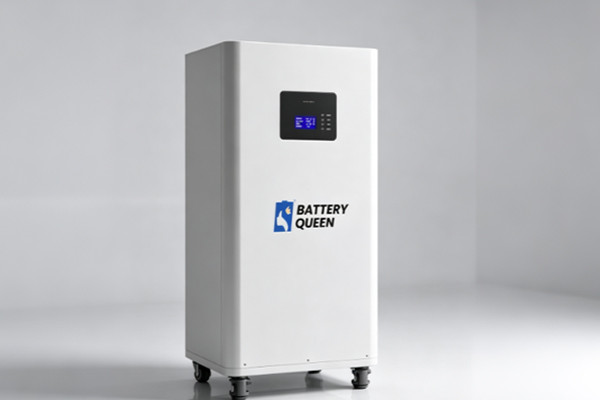
With the increasing demand for RV travel, outdoor living, and mobile offices, RV energy storage systems have higher requirements for battery performance. During travel, RVs need to provide stable power for refrigerators, lighting equipment, air conditioners, small appliances, communication devices, and other daily necessities. Therefore, energy storage batteries not only need sufficient capacity but also require high safety, long cycle life, reasonable weight, and convenient maintenance. Among various types of power and energy storage batteries, LiFePO₄ battery cells have become a popular choice for RV energy storage systems. Compared with traditional lead-acid batteries, LiFePO₄ battery cells offer higher energy utilization efficiency, longer cycle life, and a more stable chemical structure, which can meet the needs of long-term use and frequent charging and discharging in RV applications. However, not all LiFePO₄ battery cells are suitable for RV energy storage. Different types of cells have differences in capacity, consistency, safety design, and service life. Choosing the right LiFePO₄ battery cells requires comprehensive consideration of RV space, power requirements, charging methods, and operating environment.
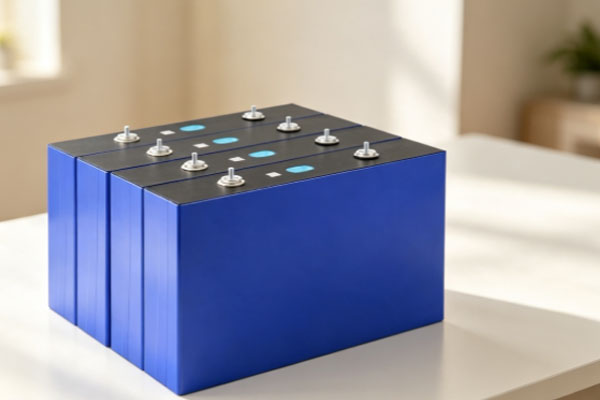
RV Energy Storage Should Prioritize High-Consistency LiFePO₄ Battery Cells
Grade A LiFePO₄ Battery Cells Are More Suitable for Long-Term Use
RV energy storage systems usually require daily charging and discharging, so cell quality directly affects the stability of the entire battery pack. Compared with ordinary-grade cells, Grade A LiFePO₄ battery cells undergo strict screening, providing more stable capacity, internal resistance, and voltage performance, making them more suitable for energy storage battery packs that operate for long periods. RV environments usually involve vibration, temperature changes, and frequent movement. If cell consistency is insufficient, different cells may experience different rates of capacity decline after long-term use, affecting the performance of the entire battery pack.
- Choose Grade A cells with high capacity consistency.
- Avoid using low-quality cells from unclear sources.
- Confirm that cells have undergone capacity and internal resistance testing.
Large-Capacity Individual Cells Save Installation Space
The interior space of an RV is limited, so the energy storage system needs to minimize occupied space as much as possible. Currently, RV energy storage systems commonly use large-capacity LiFePO₄ battery cells, such as 100Ah, 200Ah, or higher-capacity specifications. Using large-capacity individual cells can reduce the number of cells required, decrease the number of connection points, simplify the battery structure, and make future maintenance easier.
- Large-capacity cells can reduce battery pack complexity.
- Connection structures are more stable.
- More suitable for installation requirements in limited RV spaces.
RV Energy Storage Requires Safe and Stable Battery Cell Types
LiFePO₄ Battery Cells Provide High Safety Performance
An RV is a mobile living space, and batteries are usually installed inside the vehicle, in storage compartments, or equipment areas. Therefore, safety performance is extremely important. LiFePO₄ battery cells use stable cathode materials, providing good safety performance under high-temperature environments and abnormal operating conditions. Compared with some high-energy-density battery types, LiFePO₄ battery cells have stronger thermal stability and are more suitable for long-term energy storage applications.
- Suitable for long-term cycling charge and discharge operations.
- Have good adaptability to temperature changes.
- Reduce safety risks during battery operation.
A Complete BMS Protection System Is Required
High-quality LiFePO₄ battery cells need to work together with a professional BMS battery management system to achieve stable performance. The BMS can monitor cell voltage, current, temperature, and charging/discharging status in real time, preventing abnormal battery operation. RV energy storage systems are often connected to solar panels, inverters, and onboard equipment, so the more complete the BMS functions are, the more reliable the system operation will be.
- Equipped with overcharge protection.
- Equipped with over-discharge and overcurrent protection.
- Supports temperature monitoring and cell balancing.
Choose Suitable Cell Capacity According to RV Power Requirements
Small RVs Are Suitable for Around 100Ah Cell Solutions
Different RVs have different energy storage requirements. If the battery system only needs to support basic daily electricity needs, such as lighting, phone charging, and small refrigerators, a small-capacity LiFePO₄ battery pack can meet the requirements. 100Ah-class battery cells usually feature flexible installation and moderate weight, making them suitable for smaller RVs.
- Meet the power supply needs of basic living equipment.
- Reduce overall battery pack weight.
- Make installation and movement adjustments easier.
High-Power RVs Are Suitable for 200Ah or Larger Energy Storage Solutions
If an RV needs to operate air conditioners, induction cookers, electric heating devices, or large appliances, a larger energy storage capacity is required. LiFePO₄ battery cell combinations above 200Ah can provide longer runtime and reduce the frequency of charging. For users who travel for long periods, large-capacity energy storage systems can significantly improve living comfort.
- Support the simultaneous use of more electrical appliances.
- Extend off-grid living time.
- Reduce dependence on external power sources.
Frequently Asked Questions
Why Don’t RVs Use Ordinary Lead-Acid Batteries for Energy Storage?
Although ordinary lead-acid batteries have lower prices, they have disadvantages such as heavy weight, lower usable capacity, and limited cycle life. RVs need to consider space and load capacity, which is why more and more users choose LiFePO₄ battery cells. LiFePO₄ batteries can provide more usable capacity while reducing maintenance frequency, making them more suitable for mobile energy storage applications.
What Should Be Considered When Using LiFePO₄ Battery Cells in RVs?
During use, attention should be paid to matching charging equipment, battery installation fixing methods, and temperature management. Especially in low-temperature winter environments, users need to confirm whether the battery supports low-temperature charging protection functions. Proper use and maintenance can improve the overall battery lifespan.
What Ah Capacity Is Suitable for RV Energy Storage?
Capacity selection depends on actual electricity consumption. For short trips, a small-capacity battery may be sufficient. For long-term living or situations requiring many electrical appliances, a larger-capacity solution is needed. Users can calculate the required energy storage capacity based on daily power consumption.
When selecting LiFePO₄ battery cells for RV energy storage, decisions should be made according to actual usage requirements. Suitable RV battery cells usually need to provide high consistency, high safety, long cycle life, and stable output capability. Battery solutions using Grade A LiFePO₄ cells, large-capacity individual cells, and complete BMS systems are more suitable for long-term mobile energy storage needs. During selection, users should not only focus on battery capacity or purchase price. Capacity determines energy storage duration, cell quality determines service life, the BMS system determines operational safety, and installation design affects actual usage performance. Only when these factors are properly matched can an RV energy storage system maintain stable operation.
For ordinary travel users, small-capacity LiFePO₄ battery packs can meet basic living electricity needs. For long-term travelers, mobile office users, or users with high electricity consumption, larger-capacity and higher-quality cell solutions are required. During installation and operation, attention should also be paid to charging equipment compatibility, battery fixing methods, and daily inspections. Choosing suitable LiFePO₄ battery cells can not only improve the RV power usage experience but also reduce maintenance frequency and make the energy storage system more reliable. Through reasonable capacity planning, high-quality cell selection, and complete protection system integration, RV power supply can become more stable and better meet daily travel and living needs.