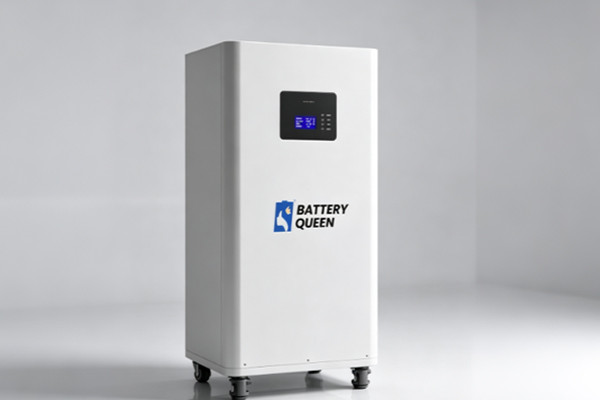
New energy battery technology continues to advance. Sodium-ion batteries, with their abundant resources and broad application prospects, are gradually becoming an important research direction in energy storage systems, electric transportation, and industrial equipment. A stable-performing sodium-ion battery is not achieved through a single material, but is composed of multiple key components, including the cathode, anode, electrolyte, separator, and current collectors. Each material plays a different role and directly affects the battery’s capacity, safety performance, cycle life, and charge-discharge efficiency.
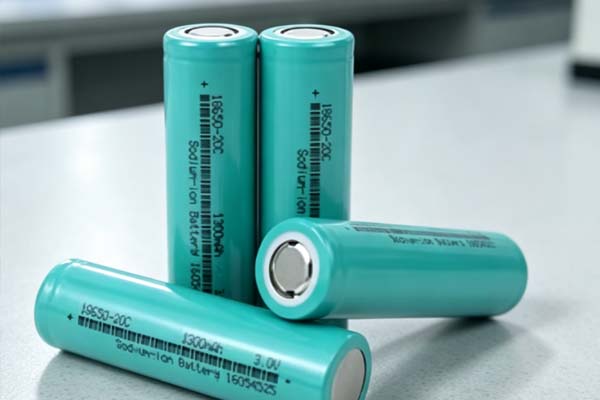
Cathode Materials Are an Important Component of Sodium-Ion Batteries
Cathode materials are responsible for storing and releasing sodium ions, significantly influencing overall battery performance, and are one of the core optimization directions in research and development.
Layered Oxide Materials
Layered oxides are relatively mature and widely used cathode materials with balanced overall performance.
- Sodium ions move in and out smoothly during charge and discharge, ensuring stable operation.
- Higher operating voltage helps improve energy density.
- Relatively stable structure during cycling, offering good reliability.
With continuous optimization, their cycling stability and safety continue to improve, providing more reliable support for sodium-ion batteries.
Polyanionic Materials
Polyanionic materials feature stable structures and good safety performance, making them highly promising in high-safety application scenarios. During charge and discharge, their crystal structure is less likely to collapse or undergo irreversible changes, resulting in more reliable operation. Their structural stability also helps slow capacity degradation and extend cycle life. In addition, they exhibit strong thermal stability, maintaining stable electrochemical performance even under high temperatures or complex environments, thereby improving safety and ensuring long-term stable operation.
Prussian Blue Materials
Prussian blue materials have good ion transport capability due to their open framework structure.
- The open structure allows rapid sodium-ion diffusion, improving charge-discharge response speed.
- Manufacturing processes continue to improve, enhancing consistency and purity.
- They show strong potential for large-scale energy storage systems.
With technological progress, their application scope is continuously expanding.
Anode Materials Provide Energy Storage Function
Anode materials are mainly responsible for the insertion and extraction of sodium ions and are equally critical to battery performance.
Hard Carbon Materials
Hard carbon is currently one of the most widely used anode materials.
- It has a rich microporous structure, providing large sodium storage capacity.
- Stable structure during cycling, with slow capacity degradation.
- Abundant raw material sources and mature processes, making it a mainstream research focus.
Hard carbon achieves a good balance between capacity and stability.
Other Emerging Anode Materials
New anode materials are continuously being developed for performance optimization. Through structural design, they improve rate capability, allowing stable output under fast charge-discharge conditions. They also optimize ion diffusion pathways, enhance transport efficiency, and reduce energy loss, further improving cycling stability and service life.
Electrolyte and Separator Ensure Ion Transport
The electrolyte and separator jointly ensure safe and efficient sodium-ion transport inside the battery.
Electrolyte
The electrolyte acts as the “transport medium” for sodium ions between the cathode and anode, directly affecting reaction efficiency and stability.
- Provides a stable migration channel for sodium ions, enabling smooth movement during charge and discharge.
- Ensures continuous electrochemical reactions and stable battery output.
- Influences charge-discharge efficiency, rate performance, and cycle life, making it a key performance factor.
High-quality electrolytes improve operational stability and maintain good consistency under different working conditions.
Separator
The separator mainly provides isolation and safety protection, serving as a critical component to prevent short circuits.
- Separates the cathode and anode to avoid direct contact and reduce short-circuit risk.
- Allows sodium ions to pass through without affecting normal electrochemical reactions.
- Offers certain mechanical strength and stability, improving overall battery safety.
A stable separator ensures safe operation and enhances overall reliability.
Current Collectors and Housing Provide Structural Support
Although current collectors and the battery housing do not participate in electrochemical reactions, they are essential for structural integrity and operational stability.
Current Collectors
Current collectors are responsible for electron collection and transport and serve as key channels for current output.
- High conductivity enables efficient electron transport, reducing internal resistance and improving energy utilization.
- Provide a stable substrate for active materials, ensuring uniform distribution and structural stability.
- Ensure continuous and stable current output during charge and discharge, improving efficiency.
Well-designed current collectors enhance conductivity and energy output capability.
Battery Housing
The battery housing protects the internal structure and is fundamental to safe operation.
- Provides physical protection for the cell, ensuring integrity during transport and use.
- Resists external impact, vibration, and environmental changes, improving safety.
- Enhances overall mechanical strength to adapt to various application scenarios.
A reliable housing design improves environmental adaptability and long-term stability.
The structural system of sodium-ion batteries is composed of multiple key materials working together. Each material plays a role in energy storage, conductivity, ion transport, and safety protection, collectively determining capacity performance, cycling stability, and charge-discharge efficiency. With continuous breakthroughs in material technology and ongoing optimization of manufacturing processes, sodium-ion batteries are becoming increasingly adaptable in energy storage systems, electric transportation, and industrial applications, and are expected to provide more diverse and cost-effective battery solutions for the new energy industry in the future.