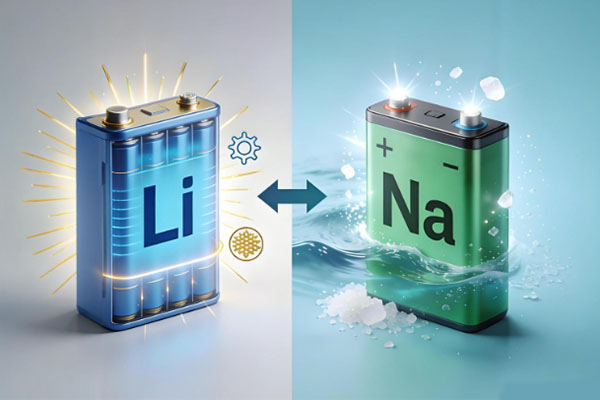
With the continuous development of new energy battery technologies, sodium-ion batteries are gradually becoming an important research direction in the fields of energy storage, electric transportation, and industrial equipment. Compared with traditional battery technologies, sodium-ion batteries use sodium elements to achieve energy storage and release, showing strong application potential in resource availability, low-temperature performance, and industrial development. For product developers, procurement companies, and industry users, understanding their working principle helps in selecting battery products that better meet specific needs.
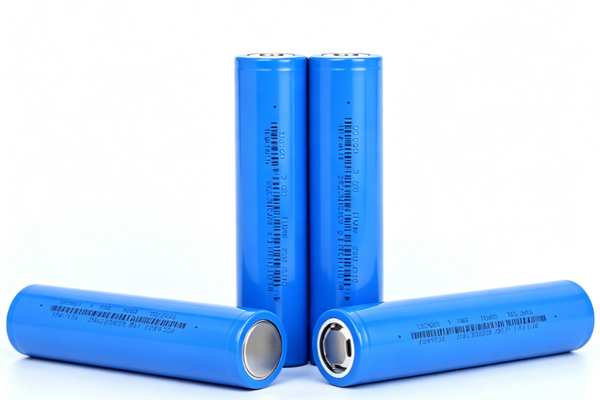
How Sodium-Ion Batteries Charge and Discharge
The charging and discharging process of sodium-ion batteries is essentially the reversible migration of sodium ions between the positive and negative electrodes, which determines how the battery stores and releases energy.
Working Principle of the Charging Process
The charging stage is the process in which sodium ions move from a low-energy state to an energy-storage state.
- An external power source supplies electrical energy, driving internal electrochemical reactions.
- Sodium ions are extracted from the cathode and migrate through the electrolyte to the anode.
- Electrons flow through the external circuit to the anode and combine with sodium ions to complete energy storage.
After charging, sodium ions are stably embedded in the anode material, and the battery enters an energy storage state.
Working Principle of the Discharging Process
The discharging stage is the process in which the battery converts chemical energy into electrical energy and outputs it externally.
- Sodium ions are released from the anode and migrate back to the cathode.
- Electrons flow through the external circuit to the cathode, generating current output.
- Continuous electrochemical reactions between the electrodes enable energy release.
Ions move internally while electrons are transferred externally, jointly completing the discharge process.
What Components Make Up a Sodium-Ion Battery
The overall performance of sodium-ion batteries depends not only on their working principle but also on their internal structural design. The interaction between different components determines efficiency, safety, and lifespan.
Cathode Material
The cathode material is one of the core regions for energy storage and release in sodium-ion batteries.
- It determines the overall capacity and operating voltage level of the battery.
- It directly affects long-term cycling stability and degradation rate.
- It typically uses crystal-structured materials that support reversible sodium-ion insertion and extraction.
High-performance cathode materials can significantly improve energy density and overall operational stability.
Anode Material
The anode material is responsible for receiving and storing sodium ions and is a key factor affecting charge and discharge efficiency.
- It provides stable insertion space for sodium ions and ensures structural reversibility.
- It influences response speed and efficiency under high-rate charge/discharge conditions.
- It determines cycle life and capacity retention during long-term use.
Proper optimization of anode material structure can effectively enhance overall battery performance and lifespan.
Electrolyte and Separator
The electrolyte and separator together form the ion transport and safety isolation system, ensuring stable battery operation.
- The electrolyte conducts sodium ions between the cathode and anode, enabling smooth electrochemical reactions.
- The separator physically isolates the electrodes to prevent internal short circuits.
- Together, they ensure smooth ion transport while maintaining structural safety and stability.
High-quality electrolyte and separator systems significantly improve battery safety and cycling reliability.
Factors Affecting the Efficiency of Sodium-Ion Batteries
The actual performance of sodium-ion batteries is influenced by multiple factors, including material properties, environmental conditions, and system management levels.
Electrode Material Performance
Electrode materials are one of the key factors determining the performance ceiling of the battery. The energy storage capability of active materials directly affects overall capacity, conductivity influences energy transfer efficiency during charge and discharge, and structural stability determines degradation rate during long-term cycling. Continuous optimization of material systems can effectively improve the overall performance of sodium-ion batteries.
Temperature Conditions
Temperature significantly affects ion migration speed and reaction activity inside the battery.
- Suitable temperature conditions help sodium ions migrate quickly and stably between electrodes.
- High temperatures may accelerate material aging and reduce battery lifespan.
- Low temperatures still allow discharge capability, but efficiency may decrease.
Proper temperature control helps extend battery life and improve stability.
Battery Management System (BMS)
The battery management system is an intelligent control unit that ensures safe operation of sodium-ion batteries.
- It monitors key parameters such as voltage, current, and temperature in real time.
- It balances multiple cells to prevent performance degradation caused by inconsistencies.
- It provides protection mechanisms against overcharge, over-discharge, and overheating risks.
A well-designed BMS significantly improves overall safety and service life.
Advantages, Applications, and Practical Significance of Sodium-Ion Batteries
After understanding the working principle, the value and future potential of sodium-ion batteries in real-world applications become clearer.
Core Advantage of Repeated Charge and Discharge
Sodium-ion batteries rely on reversible electrochemical reactions to achieve long-term cycling capability.
- They meet the long-term stable operation requirements of large-scale energy storage systems.
- They are suitable for frequent charge/discharge scenarios such as peak shaving and backup power systems.
- They help reduce overall maintenance and replacement costs over long-term use.
Stable cycling performance provides a strong foundation for energy storage applications.
Resource and Application Advantages
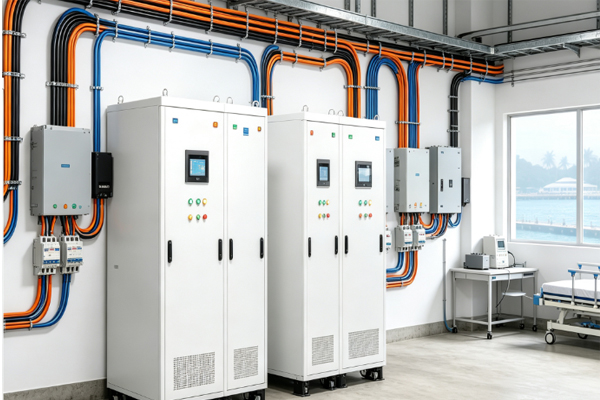
Sodium-ion batteries have significant advantages in raw material supply and application scope. Sodium resources are abundant and widely distributed, reducing raw material dependency risks and supporting a more stable and sustainable battery supply chain. They can be widely used in residential and commercial energy storage systems, electric two-wheelers, three-wheelers, and communication base station backup power systems, and can also be extended to industrial equipment and renewable energy storage projects. These resource and application advantages jointly accelerate their industrialization process.
Significance for Product Selection and Industry Development
Understanding the working principle of sodium-ion batteries is important for practical application and industry evaluation.
- It helps select suitable battery products based on capacity and performance requirements.
- It enables system configuration optimization according to usage environments.
- It improves operational efficiency and reduces long-term maintenance costs.
- It standardizes usage methods and extends battery lifespan.
- It helps identify trends and technological directions in the new energy battery industry.
With continuous advancements in materials and manufacturing processes, sodium-ion battery performance and commercialization will keep improving, making it an important technology route in the new energy storage sector.
Sodium-ion batteries achieve energy storage and release through the reversible migration of sodium ions between the cathode and anode. Combined with a mature electrochemical system, they demonstrate strong application potential in energy storage, new energy transportation, and industrial equipment. As material technologies, manufacturing processes, and battery management systems continue to advance, sodium-ion batteries will achieve continuous breakthroughs in performance, reliability, and commercialization, becoming an important technology direction in the new energy industry.