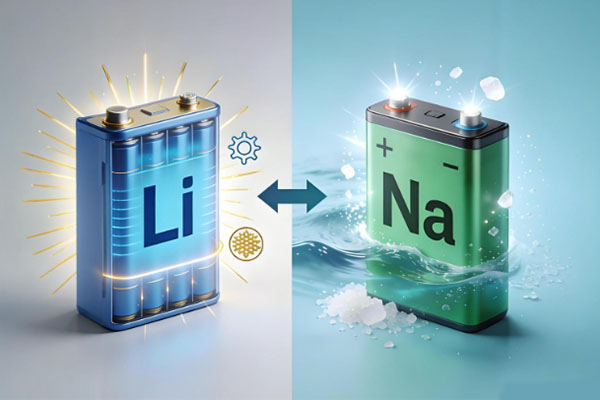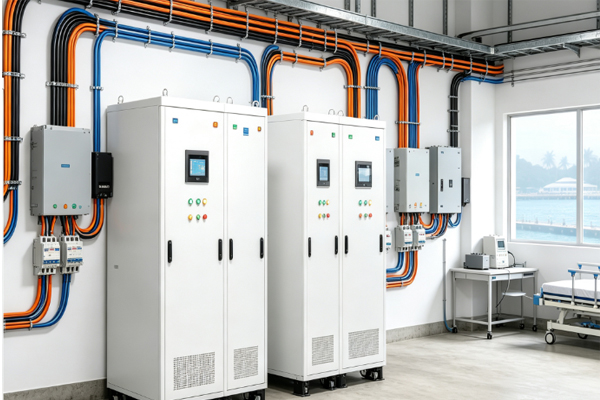
As an emerging energy storage technology, sodium-ion batteries are gradually being used in energy storage systems, electric vehicles, RVs, boats, portable power stations, and other applications. In a sodium-ion battery system, the BMS (Battery Management System) is an important component connecting the battery cells, battery pack, and end-use equipment. A BMS not only monitors battery operating conditions but also provides protection, control, and data management functions. For businesses purchasing or developing OEM/ODM sodium-ion batteries, selecting an appropriate BMS solution is important for improving the safety, stability, and reliability of the overall battery system.
Why Do Sodium-Ion Batteries Need a BMS?
Real-Time Battery Monitoring
During charging and discharging, the voltage, current, and temperature of a sodium-ion battery continuously change. A BMS can collect real-time data such as individual cell voltage, battery pack voltage, charging and discharging current, and temperature through sensors.
By continuously monitoring these parameters, the BMS helps users understand the battery’s operating condition while providing important data for protection and control functions.
Managing the Charging and Discharging Process
Different sodium-ion batteries may have different charging voltage, discharge cutoff voltage, and current ranges. Operating a battery outside its recommended charging and discharging conditions for extended periods may affect its performance and service life.
A BMS can manage the charging and discharging process according to preset parameters. When a protection threshold is reached, it can limit or disconnect the corresponding circuit, helping reduce the risks associated with abnormal operation.
What Are the Core Functions of a Sodium-Ion Battery BMS?
Overcharge and Over-Discharge Protection
Overcharge protection is one of the key functions of a BMS. When the battery voltage reaches the preset upper limit, the BMS can stop or limit further charging.
During discharge, when the battery voltage falls below the specified safe range, the BMS can activate over-discharge protection to prevent continued deep discharge.
Overcurrent and Short-Circuit Protection
When equipment operates abnormally or the load suddenly increases, the battery may experience excessive discharge current. A BMS can continuously monitor current changes and activate protective measures when the current exceeds the preset limit.
In the event of a short circuit or other abnormal condition, the BMS can also disconnect the relevant circuit, providing an additional layer of protection for the battery system.
Temperature Monitoring and Protection
Temperature can affect battery charging and discharging performance, making temperature monitoring another important BMS function. Temperature sensors can monitor the temperature of battery cells and the battery pack.
For high- or low-temperature conditions, the BMS can limit charging or discharging according to preset temperature thresholds, helping keep the battery within its specified operating range.
Cell Balancing
When multiple cells are connected to form a battery pack, differences in manufacturing and operating conditions can cause individual cells to gradually develop differences in voltage and capacity. A BMS can use balancing functions to reduce these differences between cells.
Cell balancing can help improve the overall performance of the battery pack and make better use of the available battery capacity.
How Does a BMS Improve the Battery User Experience?
Providing SOC and Other Battery Status Information
A BMS can estimate the battery’s SOC (State of Charge) based on operating data such as voltage and current. Users can then check the remaining battery capacity through a display or communication system.
For energy storage systems, RVs, and portable power stations, accurate battery status information can help users better manage charging, discharging, and energy consumption.
Supporting Smart Communication
Modern battery systems often need to exchange data with inverters, chargers, or equipment control systems. Therefore, BMS communication capability is also an important parameter to consider when customizing a battery.
Depending on project requirements, BMS solutions can support communication methods such as CAN, RS485, and Bluetooth, allowing battery data to be transmitted and monitored.
What BMS Requirements Apply to Different Applications?
Energy Storage Systems
Energy storage batteries are generally expected to operate for long periods. Therefore, the BMS should focus on functions such as cell monitoring, temperature management, SOC estimation, cell balancing, and communication.
Electric Vehicles and Power Equipment
Electric vehicles and power equipment often require high instantaneous power and continuous discharge capability. The BMS needs to be matched to the motor power, battery capacity, and maximum discharge current while providing appropriate overcurrent, short-circuit, and temperature protection.
RVs, Boats, and Portable Power Stations
These applications may require consideration of ambient temperature, available installation space, and long-term operating conditions. In addition to basic protection functions, the BMS can be integrated with displays, Bluetooth, or communication interfaces to provide users with more convenient battery status information.
How to Choose a BMS for an OEM/ODM Sodium-Ion Battery?
When developing an OEM/ODM sodium-ion battery, the BMS should not be selected separately. It needs to be properly matched with the cells and the complete battery pack.
Businesses should define parameters such as the number of cells connected in series and parallel, rated voltage, capacity, maximum charging and discharging current, operating temperature, communication protocol, and target application.
For sodium-ion battery suppliers such as DeliGreen that provide OEM/ODM services, the cells, battery Pack, and BMS can be matched according to specific application requirements to develop a complete customized battery solution.
The role of a BMS in a sodium-ion battery goes beyond basic battery protection. It also includes real-time monitoring, charging and discharging management, temperature control, cell balancing, battery status estimation, and data communication.For applications such as energy storage, electric vehicles, RVs, boats, and portable power stations, BMS configurations should be adjusted according to actual operating requirements.When purchasing or customizing sodium-ion batteries, businesses should treat the BMS as an integral part of the overall battery solution. Comprehensive matching of cells, voltage, capacity, power output, operating conditions, and BMS functions can help create a more stable and reliable sodium-ion battery system.