In a battery system, every component inside the cell plays an important role, and the electrolyte is one of the key materials that significantly affects battery performance. With the growing demand for new energy storage, electric vehicles, and industrial equipment applications, sodium-ion batteries are receiving increasing attention. As an essential medium for ion transport, the electrolyte is directly related to the battery’s charge and discharge efficiency, safety performance, and cycle life. Understanding the function of sodium-ion battery electrolyte helps to gain deeper insight into how batteries work and makes it easier for users to understand the performance characteristics of different battery technologies.
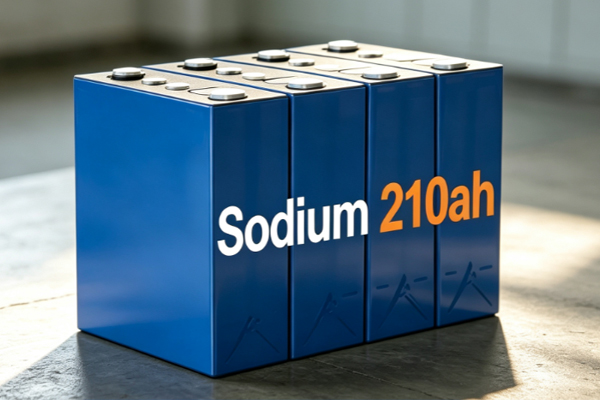
Sodium-Ion Battery Electrolyte Is Responsible for Sodium-Ion Transport
The electrolyte in sodium-ion batteries mainly undertakes the task of ion transport and is an important part of completing electrochemical reactions.
Providing Ion Transport Channels
During the charge and discharge process, sodium ions need to move between the positive and negative electrodes.
- During charging, sodium ions move from the cathode to the anode to store energy, while the electrolyte ensures smooth ion transport.
- During discharging, sodium ions return to the cathode to release energy, and the electrolyte prevents ion blockage or accumulation.
- The electrolyte provides channels for ions, enabling stable back-and-forth movement between electrodes and maintaining normal battery operation.
Stable ion transport helps ensure proper charge and discharge performance and reduces performance loss.
Promoting Electrode Reactions
The electrolyte helps sodium ions move quickly, improves the reaction efficiency of the positive and negative electrodes, and maintains internal battery balance, thereby enhancing overall operating efficiency. At the same time, it improves the reaction environment on the electrode surface, making reactions smoother, reducing energy loss, and improving output stability.
Sodium-Ion Battery Electrolyte Affects Battery Performance
Electrolyte performance directly affects battery capacity, rate capability, and cycle stability.
Affecting Charge and Discharge Speed
Different electrolyte formulations influence ion transport efficiency.
- Higher ionic conductivity means lower transport resistance and faster sodium-ion movement.
- Smoother charge and discharge processes reduce delay and polarization, improving response speed.
- Helps achieve high power output and ensures stability under high current conditions.
Proper electrolyte design can improve the power performance and high-rate capability of sodium-ion batteries.
Affecting Cycle Life
Long-term battery operation requires a stable environment.
- Reduces side reactions between electrolyte and electrodes, lowering by-product formation.
- Slows capacity degradation and maintains higher usable capacity.
- Improves long-term stability and ensures continuous output capability.
A stable electrolyte helps extend the lifespan of sodium-ion batteries and improves cost efficiency.
Affecting Low-Temperature Performance
Environmental changes can affect battery performance.
- Maintains good fluidity at low temperatures and avoids excessive viscosity.
- Reduces internal resistance increase and minimizes low-temperature performance degradation.
- Expands operating temperature range and improves environmental adaptability.
Optimized electrolytes enhance the discharge capability of sodium-ion batteries in low-temperature environments.
Main Components of Sodium-Ion Battery Electrolyte
Electrolytes are usually composed of multiple materials, each serving different functions.
Sodium Salt
Sodium salt is the core material that provides sodium ions. It dissociates in the solvent to release mobile sodium ions and continuously participates in electrode reaction cycles during charge and discharge. At the same time, the type and concentration of sodium salt directly affect the conductivity and stability of the electrolyte. A suitable sodium salt selection can provide a continuous and stable ion source for sodium-ion batteries, ensuring long-term reliable operation.
Organic Solvent
The solvent is responsible for dissolving sodium salts and providing an ion transport environment.
- Improves the solubility and dispersion of sodium salts, ensuring uniform distribution in the electrolyte.
- Promotes ion movement and reduces transport resistance.
- Affects battery safety and stability.
A high-quality solvent system can enhance the operating performance of sodium-ion batteries.
Additives
Additives are used to optimize electrolyte performance.
- Improve electrode interface stability by forming a more stable protective layer.
- Reduce side reactions, lowering gas generation and electrolyte decomposition.
- Enhance battery safety.
Proper use of additives can improve the overall performance and stability of sodium-ion batteries.
How Electrolyte Affects the Safety of Sodium-Ion Batteries
Battery safety is always a key concern for users, and the electrolyte plays an important role in this aspect.
Maintaining Internal Chemical Stability
A stable electrolyte can reduce abnormal reactions.
- Lowers the risk of material decomposition and prevents drastic changes under high temperature or high voltage.
- Reduces gas generation, thereby lowering the risk of swelling or pressure abnormalities.
- Improves cell reliability, helping the battery maintain structural stability during long-term use.
Good chemical stability enhances the safety level and reliability of sodium-ion batteries.
Controlling Thermal Stability
Temperature changes affect battery operation. The electrolyte reduces the risk of high-temperature reactions and thermal runaway, improves heat resistance so the battery remains stable at elevated temperatures, and slows performance degradation caused by thermal aging. Good thermal stability helps sodium-ion batteries adapt to more application scenarios and improves safety.
Optimizing Electrode Interface
The contact state between electrolyte and electrodes affects battery lifespan.
- Forms a protective layer that reduces side reactions.
- Reduces electrode degradation and slows material aging.
- Maintains structural stability and improves cycling consistency.
Good interface control improves the reliability and lifespan of sodium-ion batteries.
The sodium-ion battery electrolyte plays an important role in ion transport, electrochemical reaction support, safety protection, and performance optimization. It is a key component that determines battery operating performance. With continuous advances in material technology, electrolyte formulations will keep improving and play an even greater role in energy storage systems, electric vehicles, and industrial equipment. High-performance electrolytes can help sodium-ion batteries achieve more stable, efficient, and safe energy applications.