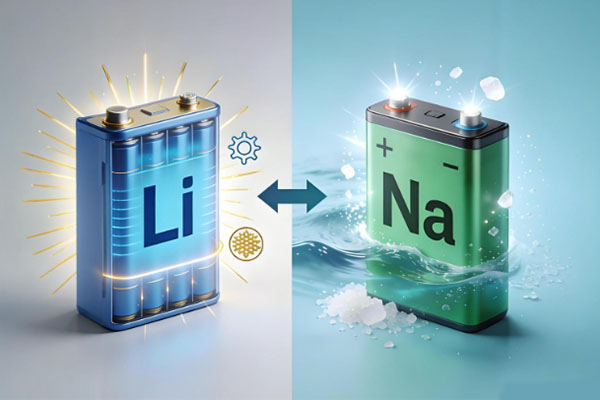
As demand for energy storage systems, electric mobility, RVs, marine equipment, and outdoor power supplies continues to grow, sodium-ion batteries are attracting increasing attention. Sodium resources are abundant, and sodium-ion battery technology has the potential to reduce material costs in certain applications. However, this does not mean sodium-ion batteries can completely replace lithium-ion batteries. For businesses evaluating battery technologies, factors such as cycle life, low-temperature performance, rate capability, safety, volume utilization, and supply chain maturity should be considered in addition to energy density and cost.

What Are the Main Limitations of Sodium-Ion Batteries?
Energy Density Can Still Be a Limitation
Energy density is one of the key indicators used to evaluate battery performance. Because sodium ions have a larger ionic radius and higher atomic mass than lithium ions, sodium-ion batteries generally face challenges in achieving the same energy density as some high-energy-density lithium-ion battery systems.
This means weight and volume should be carefully considered in applications where space and mass are highly constrained, such as long-range passenger vehicles and portable electronic devices.
However, for stationary energy storage, outdoor power systems, low-speed electric vehicles, and other applications where extreme energy density is less critical, this limitation may be less significant.
Cost Advantages Depend on the Actual Supply Chain
Some raw materials used in sodium-ion batteries are relatively abundant, giving the technology potential cost advantages. However, the final battery price is not determined by cathode and anode materials alone.
Cell manufacturing scale, production equipment, manufacturing yield, BMS, packaging, testing, and supply chain maturity can all affect the final cost.
Therefore, businesses should not evaluate sodium-ion battery cost advantages based solely on the price of individual materials. A more comprehensive approach is to compare the total system cost and cost per unit of stored energy over the battery’s service life.
Cycle Life and Rate Capability Also Matter
Cycle Life Affects Long-Term Operating Costs
The cycle life of a sodium-ion battery depends on factors such as cathode and anode materials, electrolyte formulation, depth of discharge, charging conditions, and operating temperature. Different material systems can deliver significantly different cycling performance.
For energy storage systems that charge and discharge frequently, cycle life directly affects replacement intervals and long-term operating costs. When purchasing sodium-ion batteries, businesses should therefore examine cycle test conditions rather than relying on a single laboratory performance figure.
Rate Capability Determines High-Power Performance
Rate capability reflects a battery’s ability to charge and discharge at high currents. For energy storage systems, outdoor power supplies, electric equipment, and certain electric vehicles, the ability to deliver high power over short periods can be important.
Factors such as electrode conductivity, ion diffusion, electrolyte formulation, and cell structure all influence rate performance. When comparing sodium-ion batteries, businesses should review continuous discharge capability, peak discharge performance, and fast-charging characteristics.
Low-Temperature Performance Requires Special Attention
Temperature Affects Ion Transport
When batteries operate at low temperatures, electrolyte viscosity, ion mobility, and electrode reaction kinetics can change. These effects may reduce available capacity, output power, and charging efficiency.
Although certain sodium-ion battery chemistries have promising low-temperature characteristics, performance can vary between products. Businesses planning to use batteries in cold regions, outdoor equipment, RVs, or marine applications should check capacity retention and charging and discharging performance across the actual operating temperature range.
Low-Temperature Charging Requires Careful Control
Fast charging at low temperatures may increase unwanted side reactions within the battery. Therefore, low-temperature applications require more than suitable cell chemistry.
A complete solution should also include BMS temperature monitoring and appropriate charging control strategies to help maintain battery performance and safety.
Battery Safety Cannot Be Evaluated by Materials Alone
Electrolytes and Separators Affect Safety
The compatibility between the electrolyte, separator, and electrode materials can influence thermal stability and long-term cycling performance. Different sodium-ion battery chemistries use different material combinations, so it is not appropriate to assume that every sodium-ion battery has the same safety characteristics.
Actual battery safety also depends on cell design, manufacturing processes, packaging, quality control, and system-level protection.
BMS Is an Important Part of System Safety
A Battery Management System (BMS) monitors parameters such as voltage, current, and temperature. It can also provide protection against overcharge, over-discharge, overcurrent, and abnormal temperature conditions.
When purchasing sodium-ion batteries, businesses should evaluate not only the cell chemistry but also BMS functions, protection parameters, temperature monitoring, and relevant system-level safety testing.
Volume, Weight, and System Integration Also Matter
Energy Density Affects Equipment Size
Even when a battery offers competitive pricing, relatively low energy density may increase the overall size of the battery system. Volume utilization is particularly important for RVs, marine equipment, mobile energy storage systems, and industrial equipment with limited installation space.
Batteries Do Not Operate Independently
A complete battery system may also require a BMS, inverter, charging equipment, wiring, thermal management components, and an enclosure.
Therefore, businesses should compare the overall system weight, dimensions, installation requirements, and usable energy instead of evaluating only the specifications of individual battery cells.
Supply Chain Maturity Is Another Important Factor
Cell Consistency Affects Product Reliability
Sodium-ion battery technology is still developing toward broader commercialization. Different manufacturers may use different material systems, production processes, and product specifications.Cell-to-cell consistency directly affects battery pack performance, reliability, and service life.During procurement, businesses should examine capacity grading, internal resistance testing, cell matching, batch consistency, and traceability procedures.
OEM and ODM Capabilities Affect Project Compatibility
For energy storage systems, RVs, marine equipment, and outdoor power projects, standard battery products may not always meet specific application requirements.Voltage, capacity, dimensions, connectors, BMS communication protocols, and installation methods may need to be customized.For this reason, a supplier’s OEM and ODM capabilities are important factors when evaluating sodium-ion battery solutions.
What Other Factors Should Businesses Consider When Purchasing Sodium-Ion Batteries?
Core Performance
Key specifications include rated capacity, operating voltage, energy density, continuous discharge rate, cycle life, charging performance, and operating temperature range.
Safety and Reliability
Businesses should review BMS protection functions, cell consistency, thermal management, packaging technology, manufacturing quality, and relevant safety testing.
Total Cost of Ownership
In addition to the purchase price, businesses should consider cycle life, maintenance costs, system integration costs, replacement costs, and overall service life to evaluate the total cost of ownership.
Customization and Delivery Capabilities
For commercial energy storage and mobile power projects, it is also important to evaluate the supplier’s cell supply capacity, production capabilities, quality control system, OEM/ODM services, delivery capabilities, and technical support.
Sodium-ion batteries offer potential advantages such as abundant sodium resources and broad application prospects. However, battery selection should not focus only on cost and energy density.Cycle life, rate capability, low-temperature performance, safety design, volume utilization, supply chain maturity, and customization capabilities can all influence the practical value of a sodium-ion battery solution.For applications such as energy storage, RVs, marine equipment, and outdoor power systems, businesses should select the appropriate sodium-ion battery chemistry based on actual operating conditions and evaluate the complete system, including cells, BMS, and supporting components.Moving beyond single-parameter comparisons toward application-specific and total-cost-of-ownership analysis can help businesses determine whether sodium-ion batteries are suitable for a particular project.