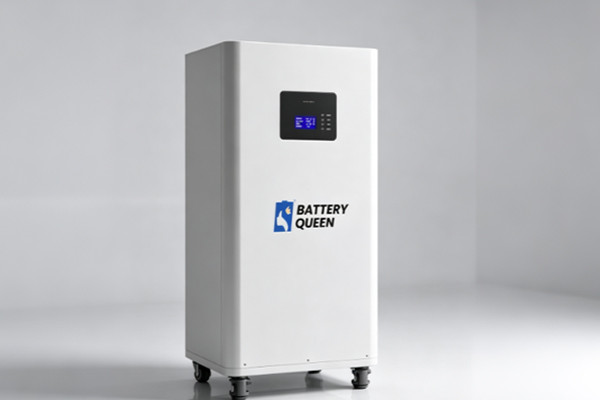
12V LiFePO4 battery packs are widely used in RVs, boats, solar energy storage systems, portable power stations, low-speed electric vehicles, and DC equipment. The maximum discharge current of a 12V LiFePO4 battery pack is not a fixed value. It depends on factors such as cell specifications, the number of parallel connections, BMS rated current, continuous discharge rate, peak discharge capability, and heat dissipation conditions. Therefore, even two LiFePO4 batteries with the same nominal rating of 12V 100Ah may have significantly different actual current-handling capabilities.
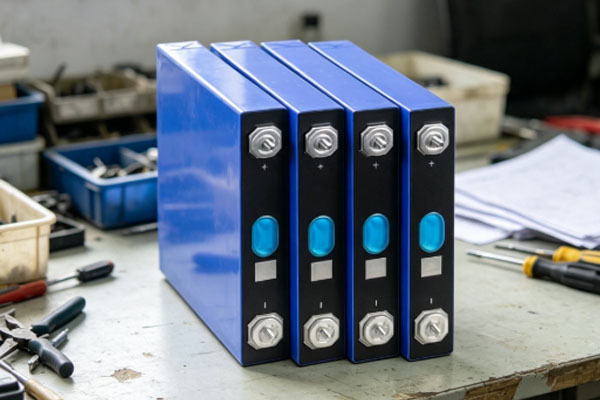
Common 12V LiFePO4 battery packs use a 4-series configuration, with a nominal voltage of approximately 12.8V. The amount of current a battery can output cannot be determined solely from the 12V voltage rating, nor can it be directly determined simply from the Ah capacity. To determine how much current a 12V LiFePO4 battery pack can handle, the cells, series-parallel configuration, BMS, and load power need to be considered together. For ordinary 12V energy storage batteries, continuous discharge currents commonly range from several dozen amps to more than 100A. High-rate batteries or large-capacity battery packs with multiple parallel connections can provide higher currents, but the specific value must be based on the technical specifications of the cells and BMS.
How Many Amps Can a 12V LiFePO4 Battery Handle?
Check the Discharge Rate of the Cells
The discharge current of a LiFePO4 battery is usually related to its “C-rate.” The C-rate represents the current level at which a battery is discharged according to its rated capacity. Essentially, it is an important indicator used to measure the battery’s ability to release energy within a given period. The C-rate can provide a direct indication of whether a battery is designed for “long-duration, low-current discharge” or “short-duration, high-power output.” Cell designs vary significantly between different discharge rates. High-rate cells generally have more optimized internal structures, thinner electrodes, and lower internal resistance, allowing them to withstand higher instantaneous currents without significant heating or voltage sag.
For example, for a 100Ah battery:
- 0.5C discharge corresponds to approximately 50A
- 1C discharge corresponds to approximately 100A
- 2C discharge corresponds to approximately 200A
Therefore, 100Ah does not mean that the battery can only output 100A, nor does it mean that it can necessarily output 200A. The actual allowable current must be determined by checking the continuous discharge rate and maximum discharge rate specified by the cell manufacturer.
Difference Between Continuous Current and Peak Current
Battery specifications often list both “continuous discharge current” and “peak discharge current.” The duration and operating conditions for these two parameters are different. Continuous discharge current is the current that the battery can stably provide for a relatively long period under specified conditions. For example, if a 100Ah battery is rated for 100A continuous discharge, this means it can continuously provide approximately 100A under the temperature, SOC, and heat dissipation conditions specified by the manufacturer. Peak discharge current is generally permitted only for a short period. For example, a particular BMS may allow 100A continuous discharge and 200A peak discharge, but 200A cannot be used continuously, otherwise it may cause BMS overheating, excessive cell temperature rise, and protection activation.
What Determines the Maximum Current of a 12V LiFePO4 Battery?
Factors Affecting the Current Capability of the Battery System
The actual output current of a 12V LiFePO4 battery pack is usually limited by the weakest component in the system.
Cell discharge capability: Determines how much continuous and peak current the cells can withstand.
BMS rated current: Controls the charging and discharging process. If the BMS has a lower rated current, the overall output current will also be limited.
Number of parallel connections: Connecting identical cells in parallel can increase the overall capacity and current-carrying capability.
Connections and heat dissipation: Busbars, cables, terminals, fuses, and the heat dissipation capability of the battery enclosure also need to match the operating current.
For example, a 4S1P 100Ah battery using cells rated for 100A continuous discharge and equipped with a 100A BMS can theoretically be designed for approximately 100A continuous discharge. If it is changed to 4S2P, two identical groups of 100Ah cells are connected in parallel, increasing the capacity to 200Ah. If the cells and connection structure permit it, the overall current capability can also be increased accordingly. However, after adding parallel cells, it is not sufficient to simply increase the number of cells while continuing to use undersized BMS, cables, and fuses.
Capacity Does Not Equal Discharge Current Capability
Ah mainly represents the battery’s energy storage capacity rather than directly indicating its maximum output current. For example, one 12.8V 100Ah battery may be designed for 100A continuous discharge, while another 12.8V 100Ah battery may only allow 50A continuous discharge. The two batteries have the same capacity, but their allowable output currents may differ because of differences in cell C-rate, BMS specifications, and structural design. Therefore, when purchasing a 12V LiFePO4 battery, in addition to checking “12V and how many Ah,” it is also necessary to check parameters such as “maximum continuous discharge current,” “peak discharge current,” and “BMS rated current.”
How Do You Calculate the Required Current Based on Equipment Power?
Higher Power Requires Higher Current
Current can be estimated using power and voltage:
Current = Power ÷ Voltage
The actual nominal voltage of a 12V LiFePO4 battery is approximately 12.8V, so 12.8V can be used for estimation.
For example, when a 500W device is operating: 500W ÷ 12.8V ≈ 39.1A
If the device has a power rating of 1000W: 1000W ÷ 12.8V ≈ 78.1A
If the device power reaches 2000W: 2000W ÷ 12.8V ≈ 156.3A
If inverter losses are taken into account, the actual current required from the battery will be higher than the theoretical calculation. For example, if a 1000W load operates through an inverter with an assumed efficiency of approximately 90%, the input power at the battery side will be approximately 1111W, so the battery current will be approximately: 1111W ÷ 12.8V ≈ 86.8A
Therefore, in a 12V system, the current increases significantly when powering high-power equipment.
High-Power Equipment Requires Special Attention to Startup Current
Motors, water pumps, refrigerator compressors, and some power tools may produce relatively high surge currents at startup. At this moment, the actual startup current of the equipment may be significantly higher than its normal operating current. If a device normally requires only 60A during operation but reaches 120A at startup while the battery BMS can only handle 100A, the battery may trigger overcurrent protection when the equipment starts. Therefore, when selecting a battery, it is not sufficient to calculate only according to the rated power of the equipment. Startup power and instantaneous current must also be considered.
Frequently Asked Questions
Q: Can a 12V 100Ah LiFePO4 battery output 100A?
A: It may be possible, but this cannot be determined solely from the 100Ah rating. If the cells support 1C continuous discharge, the BMS has a rated continuous discharge current of at least 100A, and the cables, fuses, and heat dissipation conditions all meet the requirements, the battery can be designed for approximately 100A continuous output. If the cells or BMS only support 50A, the actual output capability should follow the lower rating.
Q: Can a 12V LiFePO4 battery output a maximum of 200A?
A: Such a design is possible, but both the cells and BMS need to support approximately 200A of continuous or peak current. For a 100Ah battery, 200A represents a 2C discharge rate. Whether it can be used continuously depends on the specific cell specifications and cannot be determined directly from the theoretical calculation.
Q: If the BMS is rated at 100A, can the battery handle 150A?
A: If the BMS has a continuous discharge rating of only 100A, it is not recommended to operate the entire battery pack at 150A continuously. Even if the cells themselves can withstand 150A, the BMS may limit the output because of overcurrent or temperature protection.
Q: Can a 12V 100Ah battery power a 1000W device?
A: Based on the theoretical current calculation, 1000W ÷ 12.8V is approximately 78.1A. If power is supplied through an inverter, inverter efficiency must also be considered, and the actual current may be close to 87A or higher. Therefore, a battery with a continuous discharge capability higher than the actual operating current should be selected, with a certain amount of additional margin reserved.
The current that a 12V LiFePO4 battery pack can handle primarily depends on the allowable discharge current of the cells, the BMS rated current, and the series-parallel configuration of the battery pack. 12V is only the voltage level, while 100Ah is only a capacity parameter. Neither can independently represent the battery’s maximum discharge capability. During battery selection, the following sequence can be used for evaluation: “equipment power → operating current → startup current → battery continuous discharge capability → BMS specifications.” For ordinary energy storage equipment with relatively low load power, a 12V battery rated at 50A–100A will generally meet many usage requirements. If the system involves an inverter above 1000W, a large motor, or other high-power equipment, the continuous and peak current specifications need to be carefully checked.
It should also be noted that the greater the current, the more significant the heat generated inside the battery and throughout the external connection system. Battery terminals, busbars, cables, fuses, and BMS power components must all be matched to the target current. Particularly in high-current operating environments, simply increasing the BMS rated current cannot improve the battery’s output capability. The discharge performance of the cells themselves remains a key limitation. Therefore, whether a 12V LiFePO4 battery pack can handle 50A, 100A, 150A, or 200A must be determined according to the specific cell and BMS specifications. Only when the cells, BMS, cables, and load parameters are properly matched can the 12V LiFePO4 battery provide stable and safe performance during actual use.