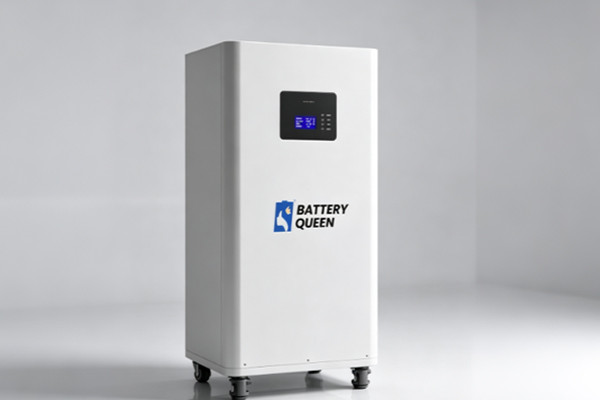

| Category | DIY Battery & Assembly |
| SEO Title | DIY LiFePO4 Battery Box: Essential Components Before You Build |
| Meta Description | Understand the key components of a DIY LiFePO4 battery box, including cells, BMS, enclosure, busbars, cables, fuses, terminals, and safety planning. |
| Suggested URL Slug | /diy-lifepo4-battery-box-essential-components/ |
| Primary Keywords | DIY battery box, LiFePO4 battery, DIY KITS, BMS, battery box, LiFePO4 cells, battery accessories |
| Suggested Featured Image | Exploded-view style image of a DIY LiFePO4 battery box with cells, BMS, busbars, fuse, cables, display, and enclosure. |
A DIY LiFePO4 battery box can be a practical way to build a custom battery for an application, but it is not simply a container filled with cells. A reliable battery box project involves selecting compatible cells, a suitable BMS, protection components, cables, terminals, an enclosure, and a charging or system-integration plan.
This guide is an educational overview. It is not a complete build manual or a substitute for qualified electrical design, product documentation, and local safety requirements. Use it to understand the major components before you decide whether a DIY battery box is the right approach for your project.
Start With the System Goal
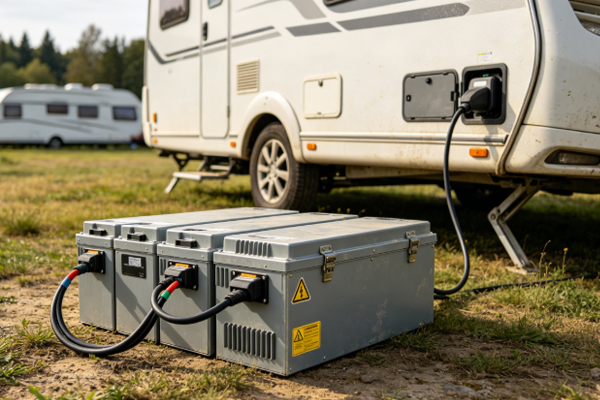
Before choosing a DIY battery box, define the target application. Is it for an RV, marine auxiliary system, backup power, solar storage, mobility equipment, or an integration project? The answer affects voltage, capacity, current demand, physical size, communication, installation conditions, and the type of enclosure you need.
A clear target also helps you decide whether to build from cells, use a ready-made DIY kit, or choose a finished lithium battery pack. For some projects, a finished product with integrated protection and documentation may be more appropriate than a custom assembly.
LiFePO4 Cells and Configuration
Cells are the energy-storage building blocks. The cell format, capacity, dimensions, terminal design, and matching approach affect the final battery layout. Cells are connected in series to reach a target voltage and may be arranged in parallel where the design requires additional capacity.
For a DIY project, use cells and configuration guidance that are appropriate for the exact system. Avoid mixing cells with uncertain history, different characteristics, or incompatible specifications. Ask for relevant datasheets and understand the mechanical and electrical requirements before assembly.
BMS, Balancer, and Protection Components
The BMS is a core component in many DIY battery projects. It must be selected for the cell configuration, chemistry, current demand, temperature sensing needs, and communication requirements. Some systems may also use a balancer, but the role and suitability of additional balancing equipment depends on the design.
Protection components can include fuses, circuit breakers, disconnects, and correctly rated cables. These should be selected as part of the full system, not added as an afterthought. Follow the approved guidance for your product and installation.
Enclosure, Busbars, Cables, and Terminals
The battery box enclosure should support the physical layout, insulation, mounting, access, and operating environment of the project. It also needs enough space for cells, BMS, cables, protection components, and safe service access.
Busbars, cables, terminals, and connectors should match the design current and connection method. Poor contact, unsuitable hardware, damaged insulation, or incorrect tightening can create performance and safety issues. Use documented components and appropriate assembly practices.
Plan Charging, Monitoring, and Installation
A DIY battery box must work with a compatible charger, inverter, controller, or load. Confirm the voltage range, charging profile, communication needs, connectors, and installation environment before finalizing the box design.
Monitoring can be useful for understanding battery status, but the display or communication method must match the BMS and the system. For higher-energy or permanent installations, involve qualified professionals and follow local requirements.
When to Choose a Finished Battery Instead
A DIY battery box is best suited to users who understand the project scope and can manage the component selection, assembly, testing, and documentation requirements. If your priority is a standard installation, clear product documentation, quick deployment, or system-level support, a finished battery pack may be a better choice.
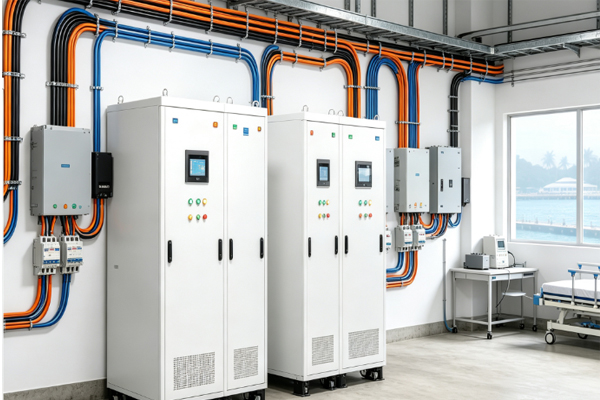
For project buyers, modular rack batteries or wall-mounted energy-storage batteries may reduce integration work and simplify system expansion when paired with compatible equipment.
| Suggested internal links: LiFePO4 Cells | Battery Packs | 48V LiFePO4 Batteries | DIY Battery Boxes | BMS & Accessories | Home Energy Storage Solutions |
Frequently Asked Questions
What components are needed for a DIY LiFePO4 battery box?
Typical components can include cells, a BMS, enclosure, busbars, cables, fuses or other protection components, terminals, connectors, and monitoring or display hardware where applicable.
Can I build a DIY battery box without a BMS?
The battery management and protection approach should be designed for the system. Many lithium battery designs use a BMS; do not omit required protection or rely on incomplete guidance.
Is a DIY battery box suitable for home energy storage?
It may be possible for qualified projects, but home energy storage involves system design, compatibility, installation, safety, and local requirements. A finished ESS battery may be more suitable for many installations.
| Call to Action: Looking for LiFePO4 cells, a DIY battery box, BMS, busbars, cables, or accessories? Share your target voltage, capacity, application, quantity, and system requirements. |