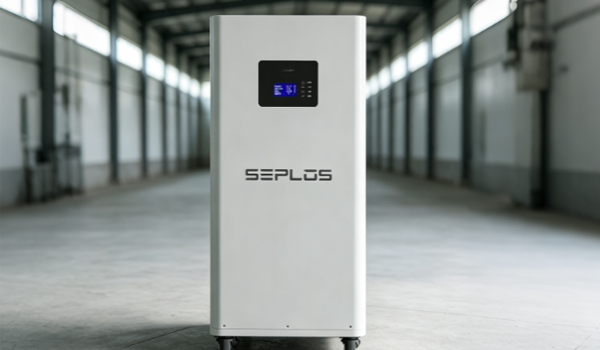
LiFePO4 batteries have good stability and a long cycle life and are commonly used in energy storage power supplies, emergency power supplies, golf carts, RVs, outdoor power supplies, and various industrial equipment. However, although LiFePO4 batteries have certain safety characteristics, this does not mean that the entire battery pack can be exposed to water without concern. After a battery is exposed to water, it is necessary to inspect not only the battery cells but also the BMS, battery connectors, busbars, wiring harnesses, fuses, relays, and the insulation structures inside the enclosure. Once water enters these areas, it may cause short circuits, leakage, corrosion, or reduced insulation performance.
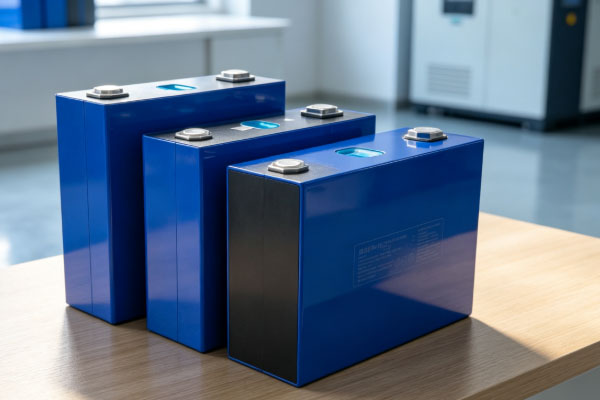
When you discover that a LiFePO4 battery has been exposed to water, do not immediately restart it, and do not connect it directly to a charger to test whether it still works normally. Especially when the battery has been completely submerged, the enclosure is damaged, the terminals have been exposed to water, or there are abnormal conditions such as heating, unusual odors, smoke, or swelling, do not attempt to disassemble or handle it yourself. Even if the battery surface has already dried, residual moisture inside may still affect electronic components and metal connections. The correct handling method should be determined according to the extent of water exposure. A small amount of water remaining on the surface of the enclosure is different from water that has entered the inside of the battery. The most important steps are to stop using the battery, avoid contact with energized parts, and then inspect it according to the battery manufacturer’s requirements. The battery can only be put back into use after confirming that the insulation, voltage, BMS, and internal connections are all in normal condition.
Why Can’t a LiFePO4 Battery Be Used Immediately After Water Exposure?
Moisture May Cause Short Circuits and Electrical Leakage
There are multiple energized components inside a LiFePO4 battery pack, such as cell connection plates, busbars, BMS wiring, and various connection terminals. If water enters the battery, it may create an abnormal conductive path while the battery is energized. Even a small amount of water may cause local electrical leakage or short circuits. This situation requires particular caution for high-voltage and large-capacity battery packs. Therefore, the first step after water exposure is not to “dry it and continue using it,” but to stop charging and discharging and avoid continuing to apply current to the battery.
Moisture May Also Cause Long-Term Corrosion
The evaporation of water does not mean that the problem has completely disappeared. If the water entering the battery contains impurities or salt, residues may remain on metal connections and electronic components and cause corrosion over time. This is why even if a battery can be powered on normally for a short period after water exposure, it cannot be assumed that the battery has fully returned to normal. Some problems may not appear immediately but may gradually become evident during subsequent charging and discharging.
How Should a LiFePO4 Battery Be Handled After Water Exposure?
Step 1: Immediately Stop Charging and Using the Battery
After discovering that the battery has been exposed to water, immediately stop charging and discharging it. If the equipment is operating, stop the equipment while ensuring personal safety, and avoid continuing to connect the charger. During handling, do not touch exposed terminals, wire connections, or metal components that have been exposed to water. If the battery is installed in a vehicle, energy storage cabinet, or large piece of equipment, do not disassemble it casually just to inspect the inside.
You can first check whether the battery has any of the following abnormalities:
- The enclosure is damaged, deformed, or has obvious water ingress.
- The battery becomes hot or produces an unusual odor, smoke, or abnormal sounds.
- The terminals, connectors, or wiring harnesses have been submerged in water.
- The BMS displays a fault, alarm, or abnormal voltage.
If heating, smoke, or obvious abnormalities occur, move away from the equipment immediately and contact a professional. Do not attempt to open the battery yourself.
Step 2: Determine the Extent of Water Exposure
If only a small amount of water has fallen onto the surface of the battery enclosure and the enclosure remains properly sealed, the situation is relatively easier to handle. First disconnect the equipment power supply and use a dry, soft cloth to remove the external moisture. If the battery has been exposed to rain for a long time, submerged in water, or water has entered the inside of the battery box, simply wiping the enclosure is not enough to determine whether the battery can continue to be used. In particular, when the “entire battery has been submerged,” the battery should be inspected according to the manufacturer’s maintenance procedures. For large-capacity energy storage batteries, high-voltage battery packs, and batteries with an internal structure that cannot be confirmed, users are not advised to open the enclosure themselves.
Step 3: Do Not Force-Dry the Battery with High Heat
Many people consider using a hair dryer to quickly dry electronic devices after water exposure, but batteries are not suitable for high-temperature treatment. Do not use an open flame, and do not directly heat the battery with high-temperature hot air for a prolonged period. High temperatures may affect the battery cells, insulation materials, plastic components, and BMS electronic components. More importantly, if an electrical fault already exists inside the battery, simply heating the battery until the surface becomes dry cannot solve the internal problem.
What Needs to Be Checked After Water Exposure?
Voltage and Insulation Conditions Require Professional Testing
For water that has entered the battery, professionals generally need to check the battery pack voltage, insulation condition, connection components, and BMS operation. For high-voltage energy storage batteries or large battery cabinets, inspections must also be performed according to the corresponding safety operating requirements. It is not appropriate to determine whether the battery is normal simply by “connecting the charger to see whether it can charge.” After inspection, if the BMS, connectors, fuses, busbars, or other electronic components have been damaged by water, they need to be repaired or replaced according to the extent of the damage.
The Battery Should Not Be Forced to Operate If the BMS Is Abnormal
The BMS is responsible for monitoring the voltage, temperature, current, and other conditions of the battery pack. If the BMS shows an alarm, fails to communicate, displays abnormal information, or repeatedly activates protection after water exposure, do not force it to operate by modifying parameters or removing protection circuits. A BMS abnormality may indicate that unresolved problems remain inside the battery. For ordinary users, the safest approach is to stop using the battery and have it inspected further by a professional.
Frequently Asked Questions
Q: Can a LiFePO4 Battery Still Be Used After Being Exposed to a Small Amount of Rain?
If only a small amount of rain falls on the surface of a properly sealed battery enclosure and no water enters the battery box, the power supply can generally be disconnected first, the surface moisture can be wiped away, and the connectors and terminals can be confirmed to be dry. If it is impossible to confirm whether water has entered the interior, direct charging and use are not recommended. Outdoor energy storage batteries and vehicle batteries in particular should be assessed according to the product’s protection rating and the manufacturer’s requirements.
Q: Can I Charge the Battery Directly After It Has Dried?
Direct charging is not recommended. “The outside is dry” and “there is no moisture inside” are two different things. Water may enter the BMS, connectors, wiring harnesses, or the inside of the battery box, where it cannot be confirmed visually. Batteries with significant water exposure should first undergo professional inspection, and they should only be used after confirming that their electrical and insulation conditions are normal.
Q: Can a LiFePO4 Battery Be Repaired After Being Submerged in Water?
This depends on the duration of water exposure, water depth, degree of submersion, and the extent of internal battery damage. If only external components are affected, some batteries may be restored after professional inspection and replacement of damaged components. If water has entered the cell area, or the cells, BMS, or critical insulation components have been seriously affected, the battery may no longer be suitable for continued use.
Q: If the Battery Does Not Heat Up After Water Exposure, Does That Mean There Is No Problem?
No. The absence of heating only means that there is currently no obvious thermal abnormality. It does not prove that the inside of the battery is completely normal. Corrosion, reduced insulation, or electronic component damage caused by water may only become apparent during subsequent use. Therefore, a battery exposed to water still needs to be inspected according to its actual condition.
How Should Different Water Exposure Scenarios Be Handled?
Scenario 1: The Surface of the Battery Enclosure Gets Wet from Rain
For example, outdoor equipment suddenly encounters rainfall, but the battery enclosure remains intact and there is no obvious water ingress inside. In this case, stop using the equipment, place the battery in a dry environment, and wipe away moisture around the enclosure, terminals, and connectors. After confirming that the battery enclosure and connection areas are completely dry, inspect the battery according to the product instructions.
Scenario 2: Water Has Accumulated Inside the Battery Box
If obvious standing water is found inside after opening the external protective structure of the equipment, do not simply wipe it dry and continue using the battery. Stop charging and discharging, and have professionals inspect the BMS, wiring harnesses, busbars, connectors, and insulation components. For larger-capacity battery packs, do not attempt to disassemble the battery cells yourself without professional equipment.
Scenario 3: The Battery Has Been Completely Submerged
If the battery pack has been submerged in water for an extended period, especially in floodwater, wastewater, or water containing significant impurities, it should be handled as a case of severe water exposure. In this situation, external drying does not prove that the inside is safe. Residual moisture, corrosion, and reduced insulation may exist inside the battery, so it should be evaluated by qualified professionals. If serious damage has occurred, do not force the battery to recharge simply to save costs.
After a LiFePO4 battery has been exposed to water, stopping charging and discharging, avoiding contact with energized components, determining the extent of water exposure, and carrying out professional inspection are relatively prudent steps. A small amount of moisture remaining on the surface of a sealed enclosure is different from complete battery submersion, so the same handling method cannot be applied to both situations. If the battery is only slightly damp externally, power should be disconnected and the battery should be wiped and dried properly. If water has entered the battery box, the BMS, connectors, wiring harnesses, busbars, and insulation condition need to be further inspected. For batteries that have been submerged or show heating, smoke, unusual odors, swelling, or severe deformation, self-repair or continued charging is not recommended.
During daily use of LiFePO4 batteries, attention should also be paid to the installation location and waterproofing conditions. Outdoor power supplies, RV batteries, energy storage batteries, and vehicle batteries should have an appropriate protection rating for the actual environment, while the battery enclosure, connectors, and sealing structures should be kept intact. After a battery is exposed to water, do not rush to test it, and do not use high-temperature drying or forced charging to determine whether it can still be used.