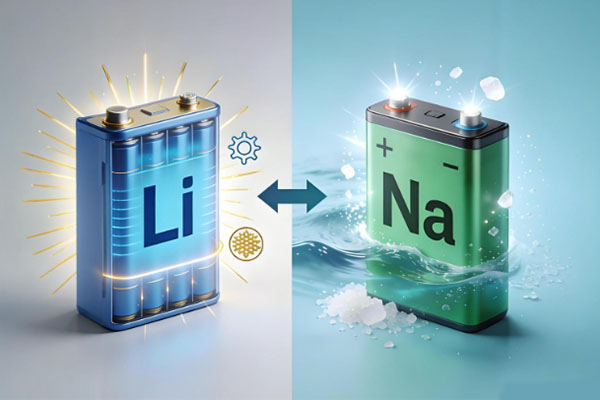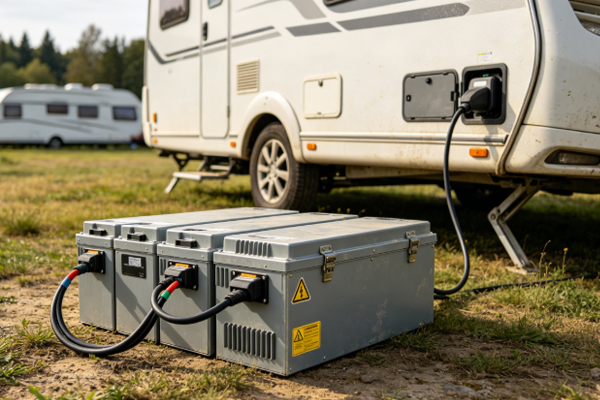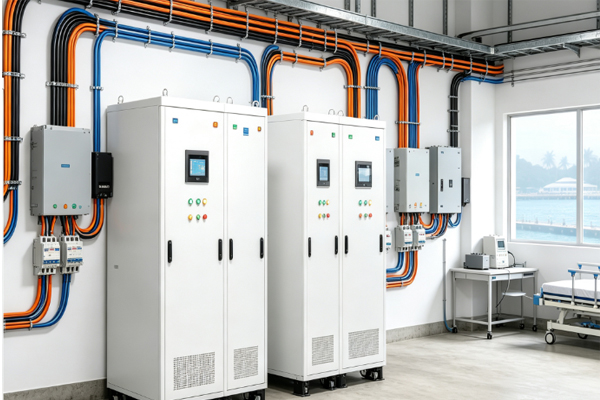
The application of sodium-ion batteries in energy storage, low-speed transportation, backup power supplies, and other scenarios places higher demands on long-term cycling capability. Repeated charging and discharging may cause capacity degradation, interfacial side reactions, material structure changes, and electrolyte loss. Improving cycle life requires coordinated optimization of the positive and negative electrode materials, electrolyte, cell manufacturing, charge and discharge strategies, and temperature control.
Optimize the Positive and Negative Electrode Material System
Electrode materials continuously undergo the insertion and extraction of sodium ions during cycling, and their structural stability affects the battery’s long-term performance. Material optimization needs to balance capacity, rate capability, stability, and manufacturing cost.
Improve Positive Electrode Structural Stability
The crystal structure of the positive electrode changes during repeated charging and discharging, which can be improved through the following methods:
- Crystal structure optimization: Reduce structural damage caused by the insertion and extraction of sodium ions.
- Elemental doping: Improve material stability and reduce performance changes during long-term cycling.
- Surface coating: Form a protective layer on the particle surface to reduce side reactions between the active material and the electrolyte.
These measures help reduce the loss of active materials and slow capacity degradation.
Improve Negative Electrode Material Performance
Changes in the negative electrode structure and interfacial condition affect battery life. Common optimization directions include:
- Optimize the hard carbon structure: Adjust the pore structure and material composition to improve sodium-ion storage and transport.
- Control material expansion: Reduce structural changes during charging and discharging and lower the risk of electrode failure.
- Improve interfacial stability: Optimize the surface condition of the negative electrode and reduce side reactions.
A stable negative electrode structure can improve the battery’s capacity retention during cycling.
Properly Match the Positive and Negative Electrode Capacities
The capacity matching between the positive and negative electrodes affects the operating condition of the cell. The following aspects should be emphasized during design:
- Control the capacity ratio: Determine a reasonable capacity matching relationship based on the material characteristics.
- Optimize active material loading: Ensure that the electrode loading is coordinated with the cell design.
- Improve electrode compaction: Balance energy density and ion transport capability.
Proper matching helps balance battery capacity and cycle life.
Improve the Electrolyte and Manufacturing Processes
The electrolyte is responsible for sodium-ion transport, while the manufacturing process affects material performance and cell consistency. Both influence the internal interfacial condition of the battery.
Optimize the Electrolyte Formulation
The electrolyte remains in long-term contact with the positive and negative electrodes, and its stability affects cycling performance. Optimization can include:
- Select a compatible system: Improve the compatibility between the electrolyte and the positive and negative electrode materials.
- Use functional additives: Enhance the stability of the interphase film on the electrode surface.
- Reduce side reactions: Minimize unnecessary reactions between the electrolyte and active materials.
A stable electrolyte system helps reduce interfacial degradation.
Improve Electrode Manufacturing Quality
Electrode quality affects the distribution of current and ions inside the cell. The following factors should be controlled during manufacturing:
- Coating uniformity: Ensure consistent distribution of active materials.
- Calendering density: Achieve a balance among compaction, energy density, and ion transport.
- Moisture content: Reduce the impact of moisture and other impurities on internal reactions.
High-quality electrodes can reduce local performance differences.
Strengthen Formation and Aging Management
Formation and aging determine the initial condition of the cell. Appropriate formation current and formation conditions can be set according to the material system to maintain a stable interphase-film formation process. Aging screening can also be used to identify cells with early performance abnormalities in a timely manner. Standardized formation and aging processes help improve cell consistency.
Optimize Charge and Discharge Management Strategies
The charge and discharge rate, state-of-charge range, and battery management methods all affect the degradation rate of the cell. Reasonable operating strategies can reduce cycling losses.
Properly Control the Charge and Discharge Rate
High-rate charging and discharging may increase polarization and temperature rise. The following points should be considered during use:
- Control the charging current: Set an appropriate charging rate according to the cell specifications.
- Limit long-term high-rate operation: Avoid continuous operation beyond the design range.
- Adjust the rate according to temperature: Adopt corresponding charging and discharging strategies based on the ambient temperature.
Appropriate rate management can reduce operating stress on the cell.
Properly Control the State-of-Charge Range
Long-term operation at extremely high or low states of charge may accelerate the degradation of certain materials. During daily use, the following measures can be taken:
- Set a reasonable upper charging limit: Plan the charging range according to actual requirements.
- Reduce deep discharge: Avoid frequently using the battery until its charge level is excessively low.
- Shorten the time spent in extreme states: Reduce the time the battery remains at a high or low state of charge.
Proper state-of-charge management helps maintain stable cycling performance.
Strengthen Battery Management System Balancing
Individual cells in a battery pack may differ in capacity and internal resistance. The battery management system should perform the following tasks:
- Monitor individual cell voltages to understand the operating status of each cell.
- Monitor temperature changes, promptly identify abnormal temperature rises, and take protective measures.
- Perform balancing control to reduce differences in cell conditions.
- Record operating data to provide a basis for fault diagnosis and maintenance.
A well-designed battery management system can reduce the impact of cell-to-cell differences on system life.
Strengthen Thermal Management and Operating Environment Control
Temperature affects internal battery reactions and charging and discharging performance. A stable operating environment must be maintained while addressing heat dissipation, temperature uniformity, and low-temperature operation requirements.
Control High-Temperature Operation
High temperatures may accelerate electrolyte side reactions and changes at the electrode interface. In practical applications, the following measures can be taken:
- Optimize heat dissipation paths: Remove the heat generated by the cells in a timely manner.
- Configure a cooling system: Select an air-cooling or liquid-cooling solution according to the battery scale.
- Reduce local hot spots: Improve cell arrangement and heat transfer conditions.
- Set high-temperature protection: Reduce power or stop operation promptly when the temperature exceeds the safe range.
Controlling the operating temperature helps slow performance degradation caused by high temperatures.
Improve Low-Temperature Charging Management
Low temperatures affect internal battery reactions and ion transport. The following points should be considered during management:
- Control the low-temperature charging current: Avoid high-rate charging at low temperatures.
- Add preheating measures: Heat the battery to an appropriate operating temperature.
- Implement battery management system control based on temperature: Adjust charging and discharging strategies according to the real-time temperature.
- Limit deep discharge in low-temperature environments: Reduce the impact of low-temperature operation on cell performance.
Proper low-temperature management can reduce the impact of ambient temperature on cell performance.
Control Temperature Differences Within the Battery Pack
If cells in different positions within a battery pack remain in different temperature environments for extended periods, their degradation rates may vary. The following measures can be considered during system design:
- Optimize cell arrangement: Ensure relatively uniform heat dissipation conditions at different positions.
- Properly arrange temperature sensors: Expand temperature monitoring coverage.
- Optimize cooling channels: Improve heat distribution inside the battery pack.
- Regularly inspect the thermal management system: Ensure that cooling and heating functions operate properly.
Reducing temperature differences between cells helps improve the consistency of system operation.
Extending the life of sodium-ion batteries requires attention to multiple aspects, including material selection, manufacturing processes, charge and discharge management, and temperature control. By improving electrode stability, enhancing cell quality, setting reasonable charging and discharging parameters, and implementing effective temperature monitoring, capacity degradation and performance decline can be slowed. Reasonable design for different application scenarios can further improve the reliability, durability, and cost-effectiveness of battery systems.