As demand for fast charging and long cycle life continues to grow in electric three-wheelers, electric scooters, industrial vehicles, and energy storage systems, LTO batteries (Lithium Titanate batteries) are attracting increasing attention from battery buyers and equipment manufacturers. Compared with conventional lithium-ion batteries, LTO batteries offer significant advantages in high-rate charging and discharging, cycle life, and low-temperature performance.
However, LTO batteries on the market can vary considerably in terms of cell materials, manufacturing processes, BMS design, and cell consistency. For buyers, identifying a high-quality LTO battery should not be based only on price or rated capacity. A comprehensive evaluation of several key technical factors is essential.
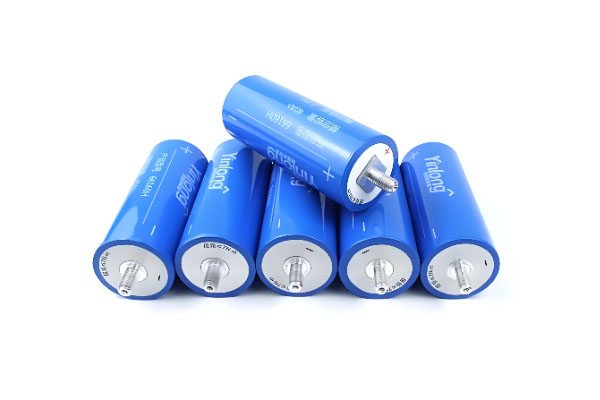
Focus on the Core Performance of LTO Cells
Quality of Lithium Titanate Materials
The key characteristics of an LTO battery come from its lithium titanate anode. Therefore, buyers should understand the type of LTO material used, material purity, particle structure, and manufacturing process.
High-quality LTO cells should provide stable material performance and efficient lithium-ion transport, supporting fast charging and high-rate discharge. Buyers can request cell datasheets, material specifications, and relevant test reports from suppliers instead of relying solely on marketing claims.
Cycle Life
Cycle life is one of the most important indicators of LTO battery quality. Lithium titanate has excellent structural stability and can withstand a large number of charge and discharge cycles under appropriate operating conditions.
However, claims such as “ultra-long cycle life” should not be evaluated based only on the number provided by a supplier. Buyers should examine the actual test conditions, including charging and discharging rates, cutoff voltage, ambient temperature, and capacity retention.
Different testing conditions can produce significantly different cycle-life results, so the testing standard should always be confirmed before purchasing.
Check the Battery’s Charging and Discharging Rate
Fast Charging Capability
Fast charging is one of the major advantages of LTO batteries, but the actual fast-charging capability varies between different LTO products.
Buyers should confirm the maximum charging rate, continuous charging rate, and recommended charging rate of the battery. If a supplier only states that a product “supports fast charging” without providing specific C-rate parameters, additional technical information should be requested.
Fast-charging performance is also affected by the charger, BMS, operating temperature, and battery pack design. Therefore, the fast-charging capability of the complete battery system cannot be evaluated based solely on the specifications of an individual cell.
High-Rate Discharge Performance
For electric three-wheelers, industrial vehicles, AGVs, and other power applications, batteries need to deliver substantial current during startup, acceleration, climbing, and other high-load conditions.
A high-quality LTO battery should not only provide high peak discharge capability but also maintain stable voltage output and controlled temperature rise. Buyers should request information about continuous discharge rate, peak discharge rate, and corresponding performance curves.
Check Cell Consistency
Cell Consistency
For an LTO battery pack consisting of multiple cells, cell consistency is extremely important. Significant differences in capacity, internal resistance, or voltage between individual cells can cause performance degradation over long-term operation.
Buyers should therefore ask whether the supplier performs cell sorting and what inspection standards are used for capacity, internal resistance, voltage, and other key parameters.
BMS Management Capability
The Battery Management System (BMS) is a critical component of an LTO battery. A high-quality BMS should generally include overcharge protection, over-discharge protection, overcurrent protection, short-circuit protection, and temperature monitoring.
For high-rate LTO batteries, buyers should also evaluate whether the BMS can accurately control charging and discharging current and respond quickly to abnormal temperature or voltage conditions.
Pay Attention to LTO Battery Safety Design
Thermal Management
Although LTO batteries offer good safety and stability, high-rate charging and discharging still generate heat. Therefore, an effective thermal management design is important for battery performance and reliability.
Buyers should understand whether the battery pack uses natural cooling, forced-air cooling, or another thermal management method according to the battery’s capacity and power requirements. The battery should also be tested to ensure stable operation within its specified temperature range.
Housing and Protection Rating
The battery housing provides mechanical protection and must be suitable for the actual installation environment. For LTO batteries used in electric three-wheelers, industrial vehicles, or outdoor equipment, buyers should pay particular attention to dust resistance, water resistance, vibration resistance, and impact protection.
Do Not Ignore Manufacturing Processes and Quality Control
Factory Manufacturing Capability
When purchasing LTO batteries, the supplier’s manufacturing capabilities are also important. Stable production processes can help reduce performance differences between different production batches.
Buyers can evaluate whether the supplier has integrated processes for cell manufacturing, PACK assembly, aging tests, and final inspection. The ability to provide quality inspection reports is also an important indicator of manufacturing reliability.
Batch-to-Batch Consistency
For large-volume purchases, consistency between production batches directly affects the long-term reliability of the equipment using the batteries.
Reliable LTO battery suppliers generally conduct strict inspections on different production batches and maintain product traceability throughout the manufacturing process.
How Can Buyers Test LTO Battery Quality?
Sample Testing
Before placing a large order, buyers should conduct sample testing whenever possible. Important test items include actual capacity, charging time, discharge performance, temperature rise, and BMS protection functions.
Sample testing allows buyers to compare actual performance with the technical specifications provided by the supplier.
Real-World Operating Tests
Laboratory data cannot completely replace real-world application testing. If an LTO battery is designed for an electric three-wheeler or industrial vehicle, buyers can simulate actual operating conditions and perform continuous operation, frequent charging, and high-rate discharge tests.
These tests can provide a clearer understanding of how the battery performs under real operating conditions.
Identifying a high-quality LTO battery requires more than comparing price, capacity, or advertised cycle life. Buyers should conduct a comprehensive evaluation based on LTO cell materials, cycle life, charging and discharging rates, cell consistency, BMS performance, safety design, thermal management, manufacturing processes, and actual test results.
For electric three-wheelers, electric scooters, industrial vehicles, and energy storage systems that require fast charging, frequent cycling, and long-term operation, choosing a reliable LTO battery supplier is equally important.
By combining high-quality cells with professional battery pack design and strict quality control, buyers can obtain an LTO battery solution that delivers stable performance, reliable safety, fast charging, and long-term value.