With the continuous expansion of markets such as energy storage systems, electric vehicles, power equipment, outdoor power supplies, and industrial backup power supplies, LiFePO₄ battery packs have become an important choice for more and more enterprises during bulk procurement due to their stable safety performance, long cycle life, and strong durability. Purchasing dozens, hundreds, or even larger quantities of battery products cannot focus only on unit price. It also requires comprehensive consideration of cell quality, battery structure, BMS management systems, supply capacity, and after-sales service. Large-scale procurement projects usually review supplier qualifications, product consistency, and long-term supply capabilities. For example, some procurement projects in the communication and power industries have clear requirements for battery pack testing, BMS functions, and supply guarantees.
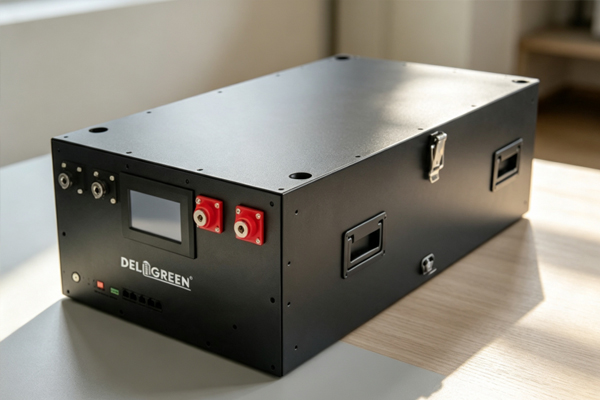
Although LiFePO₄ battery packs have high safety performance, there are differences among manufacturers in production processes, materials used, cell grades, and manufacturing standards. If purchasers lack relevant experience, they may encounter problems such as insufficient capacity, unqualified cycle counts, poor battery consistency, or difficulties with later maintenance. Therefore, before conducting bulk procurement, it is necessary to clarify the application environment, capacity requirements, installation methods, and quality standards in advance, and select a product procurement solution that better meets actual needs.
Select the Appropriate Specifications of LiFePO₄ Battery Packs
Determine Battery Capacity According to Application Scenarios
Before purchasing LiFePO₄ battery packs in bulk, it is necessary to understand the actual power requirements of the equipment. Different application scenarios have significant differences in battery capacity, voltage platforms, and discharge performance requirements. For example, battery solutions used for household energy storage, electric vehicles, communication base stations, and industrial equipment are not exactly the same. Procurement personnel need to calculate the appropriate capacity based on equipment power, operating time, charging and discharging frequency, and other data. This can prevent insufficient capacity from causing inadequate runtime and avoid unnecessary costs caused by excessive capacity.
- Household energy storage usually focuses on continuous power supply time and safety stability, requiring battery packs suitable for long-term cycling use.
- Industrial equipment places greater emphasis on stable output capability and needs to consider battery discharge performance and environmental adaptability.
- Outdoor power supply products need to balance weight, capacity, and portability.
Confirm Battery Voltage and Combination Methods
LiFePO₄ battery packs are usually connected in series or parallel according to different requirements, forming voltage levels such as 12V, 24V, 48V, or even higher. During bulk procurement, it is necessary to confirm whether the battery pack can directly match the equipment system. Different devices have different requirements for voltage, current interfaces, and communication protocols. If these details are not confirmed before purchase, installation difficulties or operational failures may occur later.
- 12V battery packs are commonly used in small energy storage equipment, RVs, electric tools, and other applications.
- 24V and 48V battery packs are commonly used in energy storage systems, solar equipment, and industrial applications.
- High-voltage battery systems are usually used in large-scale energy storage projects and require professional design and management.
Pay Attention to Cell Quality and BMS System Functions
Select Reliable LiFePO₄ Battery Cells
Battery cells are the core components of LiFePO₄ battery packs. Cell quality directly affects the service life, safety, and user experience of the entire battery pack. During bulk procurement, it is necessary to understand whether the supplier uses A-grade cells or other grades of cells. High-quality cells usually have high capacity consistency, stable internal resistance, and long cycle life, which can reduce performance degradation of battery packs during long-term use.
- A-grade cells usually undergo complete inspection and have more stable performance parameters.
- The higher the consistency between cells, the more balanced the overall operation of the battery pack.
- Reliable suppliers can usually provide cell inspection reports and relevant certification documents.
Check the Functions of the BMS Battery Management System
The BMS is an important protection module of LiFePO₄ battery packs, responsible for monitoring voltage, current, temperature, and cell status. During bulk procurement, purchasers should not only focus on battery capacity but also confirm whether BMS functions are complete. An excellent BMS system can help prevent overcharging, over-discharging, overcurrent, and abnormal temperature conditions, improving battery safety. Some large procurement projects also consider BMS monitoring functions as an important part of product inspection.
- Basic BMS should provide overcharge protection and over-discharge protection.
- High-performance BMS supports active balancing to improve cell consistency.
- Intelligent BMS can connect with equipment management systems through communication interfaces.
Supplier Capability Review Required for Bulk LiFePO₄ Battery Pack Procurement
Check Manufacturer Production Capability and Quality Systems
Bulk procurement is not only purchasing products but also selecting a long-term cooperation supplier. Therefore, it is necessary to understand whether the manufacturer has stable production capacity, complete inspection processes, and continuous supply capability. If procurement quantities are large but the supplier’s production capacity is insufficient, problems such as delayed delivery and inconsistent batch quality may occur. Before establishing cooperation, companies should review the manufacturer’s production environment, quality management processes, and previous supply cases.
- Understand whether the manufacturer has independent production capabilities.
- Check whether product inspection processes are complete.
- Confirm whether the supplier can provide stable bulk delivery.
Pay Attention to After-Sales Service and Technical Support
LiFePO₄ battery packs are products designed for long-term use. After procurement is completed, installation guidance, troubleshooting, and maintenance support are still required. If suppliers only provide products without technical services, maintenance costs may increase when problems occur later. Reliable suppliers usually provide product instructions, installation guidance, remote technical support, and after-sales guarantees.
- Provide battery pack usage instructions and maintenance recommendations.
- Support customized battery solutions.
- Establish long-term after-sales communication channels.
Frequently Asked Questions
Will Bulk Purchasing of LiFePO₄ Battery Packs Be Cheaper?
Bulk procurement usually allows buyers to obtain more favorable prices because manufacturers can reduce production costs per unit. However, price is not the only evaluation standard. Excessively low prices may indicate lower cell grades, reduced configurations, or insufficient after-sales service. During procurement, companies should comprehensively compare product configurations, cell quality, BMS functions, and manufacturer capabilities to select a solution with better overall value.
How to Determine Whether the Quality of LiFePO₄ Battery Packs Is Reliable?
To evaluate battery pack quality, purchasers can check cell brands, battery inspection reports, product certifications, and actual application cases. At the same time, suppliers can be required to provide samples for testing. Product performance can be verified through capacity tests, charging and discharging tests, and stability tests.
Does Bulk Procurement Support Customization?
Most professional battery manufacturers support customized services, such as adjusting battery capacity, voltage, battery enclosure structure, interface methods, and BMS functions. Before procurement, companies can communicate with manufacturers and develop suitable designs according to equipment requirements.
Bulk procurement of LiFePO₄ battery packs is a purchasing process that requires comprehensive consideration of product performance, supply capability, and long-term operating costs. During procurement, companies should clarify application requirements in advance, select suitable voltage and capacity specifications, and pay special attention to cell quality, BMS protection functions, and manufacturer production capabilities. High-quality LiFePO₄ battery packs not only need to provide long cycle life but also maintain stable performance during long-term operation.
Therefore, procurement personnel should not focus only on purchase price but should consider the overall value of products, including safety, service life, maintenance costs, and supplier service capabilities. During the procurement process, risks can be reduced through sample testing, supplier audits, and technical communication. Choosing manufacturers with mature production experience and complete service systems can help companies obtain more stable and reliable battery products.