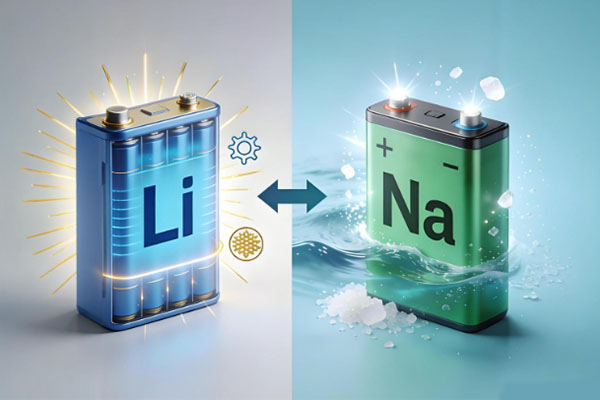
With the continuous development of new energy technologies, battery products are also undergoing constant iteration and upgrades. In recent years, sodium-ion batteries have gradually become a focus in the fields of energy storage, electric transportation, and industrial equipment due to their abundant resource reserves, continuously improving performance, and broad application prospects. Although lithium-ion batteries still hold a large market share, sodium-ion batteries are expanding into new application areas by leveraging their own advantages. For equipment manufacturers, project procurement personnel, and industry practitioners, understanding their characteristics helps in selecting more suitable battery solutions and better grasping the development direction of the new energy industry.
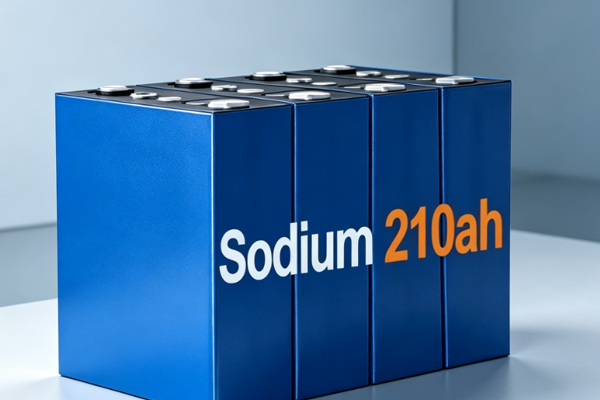
Abundant Resource Reserves and Clear Supply Advantages
One of the key reasons sodium-ion batteries have attracted attention is that sodium is widely abundant in nature and widely distributed, giving it strong long-term supply potential.
Wide Distribution of Sodium Resources
Sodium has sufficient reserves and diverse acquisition channels, providing a solid resource foundation.
- Seawater, salt lakes, and various minerals all contain abundant sodium resources, with large overall reserves and wide distribution.
- Raw material sources cover both land and marine systems, offering more diversified supply pathways.
- In the long term, sodium resource supply is stable, helping support large-scale industrial development.
The abundant resource base provides stable support for the sodium-ion battery industry and reduces dependence on scarce resources.
More Flexible Raw Material Supply
The diverse ways of obtaining sodium resources give the industry greater flexibility in raw material allocation and production organization. Compared with systems relying on a single metal resource, this structure can reduce supply chain volatility risks, facilitate large-scale production and cost optimization, and better meet the needs of large-scale energy storage and industrial applications.
Good Low-Temperature Performance
In low-temperature or even extremely cold environments, sodium-ion batteries demonstrate strong adaptability.
Maintains Good Discharge Capability
Compared with some traditional batteries, sodium-ion batteries experience less performance degradation under low-temperature conditions.
- They can still maintain relatively stable output in low-temperature environments.
- Suitable for energy storage and power supply systems in cold northern regions and high-altitude areas.
- Helps improve operational reliability under extreme climates.
This characteristic gives them an advantage in special environmental applications.
Improved Environmental Adaptability
As application scenarios expand, requirements for environmental adaptability of batteries continue to increase.
- Can be used in outdoor energy storage systems such as solar storage stations and off-grid power systems.
- Supports operation of some new energy vehicles under different climatic conditions.
- Meets power supply needs of industrial equipment in various temperature environments.
Improved environmental adaptability further broadens their application range.
Continuously Optimized Safety Performance
Safety is a key indicator of battery technology. Sodium-ion batteries continue to improve in safety performance through material and system design optimization.
Good Thermal Stability
Battery stability under high temperatures or complex operating conditions directly affects safety.
- Optimized material systems improve stability in high-temperature environments.
- Thermal management design helps reduce the risk of thermal runaway.
- Maintains relatively stable performance during long-term cycling.
Good thermal stability enhances system operational safety.
Use with Intelligent Management Systems
Sodium-ion batteries are typically used in combination with a Battery Management System (BMS) to improve overall safety. The system can monitor parameters such as voltage, current, and temperature in real time, and dynamically control operating conditions to prevent overcharging, over-discharging, and abnormal conditions. It also provides multiple protection mechanisms, ensuring stable operation in complex environments and significantly improving practical safety and reliability.
Expanding Application Fields
With technological maturity and cost optimization, sodium-ion batteries are entering more industry scenarios.
Widely Used in Energy Storage Systems
The energy storage sector is one of the key development directions for sodium-ion batteries, where their stability and cost advantages provide strong competitiveness.
- In residential energy storage, they are used for solar energy storage and daily electricity regulation, improving energy efficiency.
- In commercial and industrial energy storage, they are used for peak shaving, valley filling, and backup power, enhancing energy management capabilities.
- In grid peak regulation and emergency power supply, they improve power system stability.
Their good cycling performance and economic advantages give them significant growth potential in the energy storage market.
New Energy Transportation Tools
With the growing demand for green mobility, sodium-ion batteries are increasingly used in transportation. They are already applied in electric two-wheelers and three-wheelers for short-distance travel, and are also being used in some low-speed new energy vehicles to improve range and cost efficiency. With technological progress, their potential in more transportation applications continues to expand.
Industrial and Communication Equipment
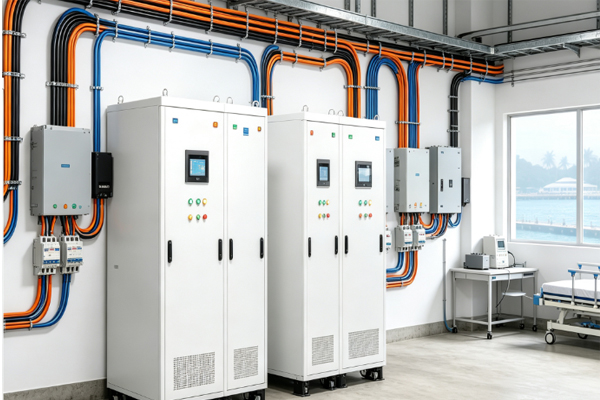
In industrial and communication fields, where high requirements are placed on power stability and reliability, sodium-ion batteries are gradually being adopted.
- Communication base station backup power to ensure stable supply during outages.
- UPS systems to guarantee safe operation of critical equipment.
- Automation control systems to improve operational reliability.
The increasing industrial applications further demonstrate their comprehensive performance advantages.
Relying on resource advantages and technological progress, these batteries are gradually establishing an important position in the new energy sector. With continuous optimization of material systems, production processes, and battery management technologies, their adaptability in energy storage systems, electric transportation, and various industrial equipment is also improving. In the future, they are expected to provide more flexible solutions for diversified applications of green energy.