Against the backdrop of rapid development in new energy vehicles, energy storage systems, smart devices, and industrial applications, battery technology has become a key factor affecting product performance and user experience. Among them, cylindrical batteries are widely used across multiple industries due to their mature manufacturing process, high structural strength, and strong adaptability. For procurement personnel, engineers, and product designers, understanding their structure and performance helps in selecting more suitable power solutions. This article provides a brief introduction to cylindrical batteries from the perspectives of definition, structure, advantages, and applications.

Basic Concept of Cylindrical Batteries
Cylindrical batteries are an important structural form within lithium battery systems. Their definition and classification form the foundation for understanding their application value and performance characteristics.
Basic Definition of Cylindrical Batteries
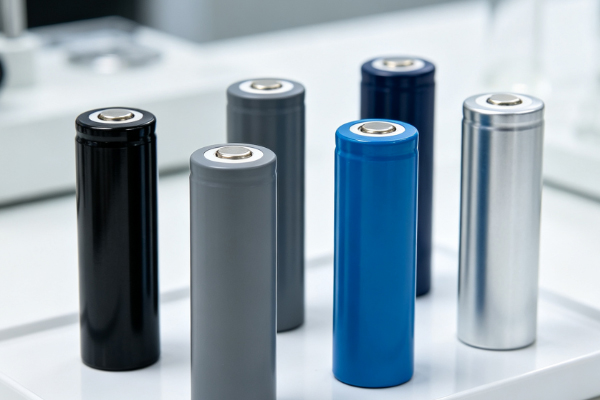
A cylindrical battery is a lithium-ion battery structure packaged in a cylindrical metal casing.
- The internal cell consists of key components such as cathode materials, anode materials, separators, and electrolyte.
- The electrodes are typically formed into a tightly wound cylindrical structure using a winding process.
- The outer casing is made of high-strength metal materials to enhance mechanical strength and impact resistance.
This structural design improves standardization in production and enhances compatibility with different devices.
Common Types of Cylindrical Batteries
Based on size and application requirements, cylindrical batteries come in multiple standard models.
- 18650 battery: widely used, with a mature supply chain and strong versatility.
- 21700 battery: offers higher capacity and energy density than 18650, with expanding applications.
- 4680 battery: a large-format new structure mainly used in new energy vehicles and energy storage systems.
Different specifications can be selected and combined according to device space, power requirements, and range targets.
Structural and Design Features of Cylindrical Batteries
The structural design of cylindrical batteries directly affects their performance and operational stability.
Standardized Size Design
Cylindrical batteries feature a highly unified size system.
- Mainstream models have clearly defined standards, enabling industry-wide application.
- Compatible with automated production equipment, improving manufacturing efficiency.
- Supports modular design and supply chain optimization.
Standardization reduces production complexity and enhances large-scale application capability.
Internal Winding Structure
Cylindrical batteries typically adopt a mature winding structure design.
- Cathode, anode materials, and separators are precisely wound in sequence to form a compact cell structure.
- Improves material utilization within limited space, increasing energy density.
- The winding structure provides good long-term stability and consistency.
This structural design helps improve battery performance and ensures stable long-term output.
Metal Casing Protection Design
Cylindrical batteries are usually encapsulated in high-strength metal casings.
- Enhances compression and impact resistance.
- Isolates internal chemical systems from external environmental influences.
- Facilitates modular integration and arrangement.
They maintain high safety and reliability even under complex operating conditions.
Performance Advantages of Cylindrical Batteries
The widespread adoption of cylindrical batteries across multiple industries is closely related to their advantages in manufacturing efficiency, structural stability, and overall performance.
High Production Efficiency
Cylindrical battery manufacturing technology is well established, offering high efficiency and scalability.
- Widely used automation equipment ensures efficient and stable production.
- Standardized processes reduce human error and improve consistency.
- Large-scale production brings significant cost advantages.
This efficient production model provides strong supply capability and price competitiveness in the market.
Good Structural Reliability
Cylindrical batteries offer high mechanical stability and long-term reliability due to their structural design. The cylindrical casing provides uniform and stable physical support for the internal cell, with relatively balanced internal pressure distribution, helping to reduce localized stress concentration. In addition, this structural feature makes them highly suitable for multi-cell series and parallel configurations. This structural reliability enables continuous and stable energy output in long-term operating systems.
Applications and Selection Considerations of Cylindrical Batteries
Cylindrical batteries are widely used in various fields, and proper selection is key to maximizing their performance.
New Energy Transportation Sector
In new energy vehicles and related transportation tools, cylindrical batteries play an important role in power support.
- Provide stable and continuous power output for electric vehicles.
- Flexible multi-cell configurations can meet different driving range requirements.
- Widely used in EV power system design and vehicle energy solution development.
With their stability and maturity, cylindrical batteries hold an important position in the new energy transportation sector.
Energy Storage and Industrial Equipment Sector
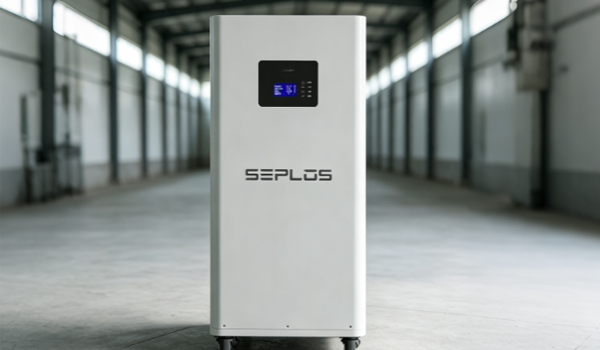
In energy storage systems and industrial applications, cylindrical batteries are also widely used. They can be applied in residential energy storage systems to enable efficient energy storage and release, provide reliable backup power in industrial systems, and support modular integration and expansion in large-scale energy storage stations. Their long cycle life and stable performance make them well-suited for long-term energy systems.
Consumer Electronics and Smart Devices
In consumer electronics and smart hardware, cylindrical batteries also have significant application value.
- Widely used in portable electronic devices and mobile terminals.
- Provide high-power output for electric tools.
- Suitable for various smart devices and IoT power requirements.
Their diverse specifications allow flexible adaptation to different product designs.
Key Factors in Selecting Cylindrical Batteries
In practical applications, selecting the appropriate cylindrical battery model is crucial for system performance.
- The battery model should match the device’s operating voltage and power requirements.
- Capacity and runtime targets should be considered when selecting specifications.
- Discharge rate parameters must be evaluated to meet different load conditions.
- Priority should be given to batteries that have passed strict quality testing and certification.
This helps further improve overall system performance and safety.
Supported by standardized manufacturing systems and a mature supply chain, cylindrical batteries have formed a well-established industrial application landscape. From power systems to energy storage platforms and various electronic devices, their adaptability continues to expand. In future technological iterations, they still have room for improvement in energy density, structural optimization, and safety management, and will continue to play an important role in multi-industry energy solutions.