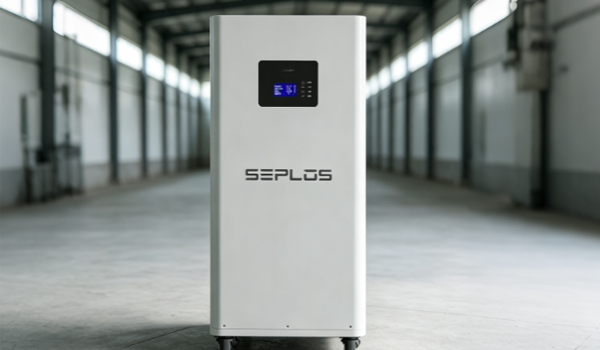
A 48V 100Ah LiFePO4 battery pack is a common energy storage battery specification, with a nominal voltage of approximately 51.2V, a nominal capacity of 100Ah, and a theoretical energy storage capacity of approximately 5.12kWh. It can be used in RVs, solar energy storage systems, low-speed electric vehicles, backup power supplies, and some small energy storage devices. Compared with purchasing a finished battery pack directly, making a battery pack yourself allows configuration according to installation space, output power, BMS functions, and interface requirements. However, the process involves cell matching, series and parallel connections, BMS matching, insulation treatment, and charge and discharge testing. People without battery assembly experience should not assemble the pack simply by following the idea of “16 cells in series.” It is also necessary to confirm whether the cell specifications, continuous discharge current, BMS parameters, and load power are compatible with each other.
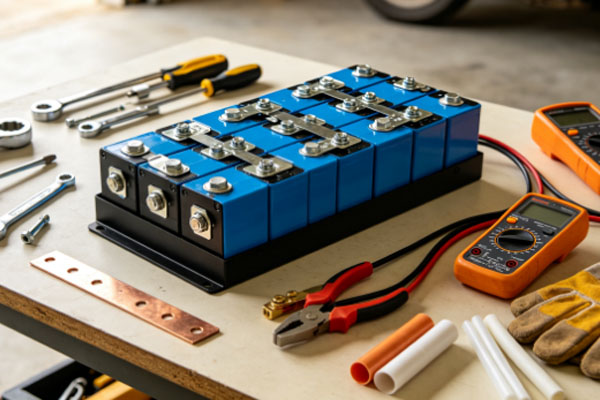
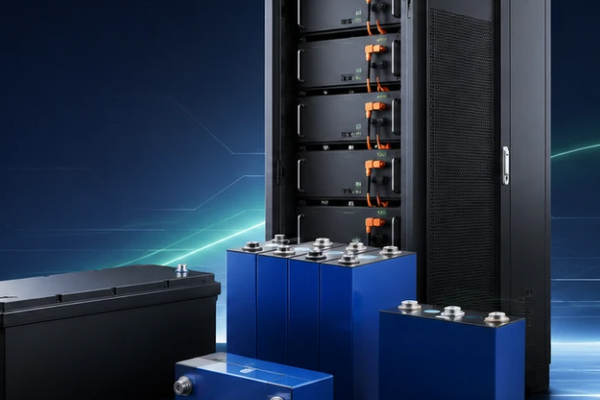
If common 3.2V 100Ah LiFePO4 single cells are used, a 16S1P configuration can be adopted to form a 48V 100Ah battery pack. After 16 cells are connected in series, the nominal voltage is 51.2V, the capacity remains 100Ah, and the theoretical energy storage capacity is 5.12kWh. It should be noted that “48V” is more commonly used as a system voltage classification, while the actual nominal voltage of a LiFePO4 battery is usually 51.2V. During assembly, it is also necessary to prepare 16 LiFePO4 cells connected in series, a BMS compatible with 16S, nickel strips or copper busbars, connecting wires, fuses, a battery box, insulation materials, and a suitable charger. The entire process should be based on cell consistency and reliable connections, avoiding the mixed use of cells with different models, capacities, or significantly different conditions.
Determine the Cell Configuration for 48V 100Ah
16S1P Is a Common Configuration
For 3.2V 100Ah LiFePO4 cells, 16 cells connected in series can achieve the target specification:
3.2V × 16 = 51.2V nominal voltage
100Ah × 1 = 100Ah capacity
51.2V × 100Ah = 5120Wh
Theoretical energy storage capacity is approximately 5.12kWh
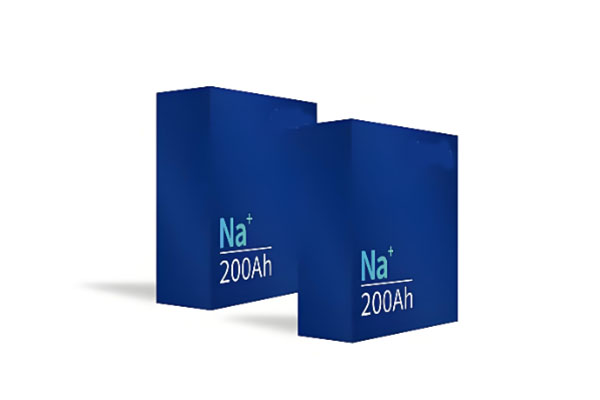
Series connection mainly increases voltage and does not increase Ah capacity. Therefore, after 16 100Ah cells are configured as 16S1P, the capacity remains 100Ah. If you want to increase the capacity, such as reaching 200Ah, you can use a 16S2P configuration. This means using two 100Ah cells in parallel for each group and then connecting the 16 parallel units in series.
Cells Need to Have Consistent Specifications
When making a 48V 100Ah battery pack, cell capacity should not be the only consideration. You should also check the nominal voltage, internal resistance, cycle count, continuous discharge capability, and production batch. Grade-A cells from the same batch, with the same model and similar capacity, are more suitable for assembling a battery pack. If the internal resistance varies too much, inconsistent voltage changes may occur after the cells are connected in series, causing the BMS to trigger protection prematurely. Therefore, before formal assembly, the cells should be inspected for appearance and matched according to actual test data.
Prepare Materials and Connect the Cells
What Main Materials Are Needed?
To make a 48V 100Ah LiFePO4 battery pack, the following materials are generally required:
- 16 3.2V 100Ah LiFePO4 cells and a 16S BMS
- Copper busbars or connecting strips, power cables, and terminals that meet the current requirements
- Battery box, insulation board, kraft paper or other suitable insulation materials
- Fuses, circuit-breaking devices, connectors, and structural components for securing the cells
The rated current of the BMS should be selected according to the actual power requirements of the equipment. For example, when the load requires a relatively high current for long-term operation, the BMS should not be selected based only on the 100Ah capacity. The continuous operating current and starting current of the equipment should also be considered.
Series Connection Sequence
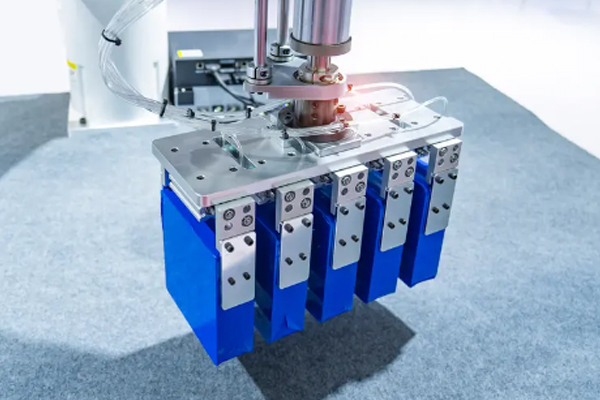
Connect the 16 cells in series according to their positive and negative terminals. The negative terminal of the first cell serves as the overall negative terminal of the battery pack, while the positive terminal of the last cell serves as the overall positive terminal. The intermediate nodes form the 16-series voltage sampling points. Special attention should be paid to the positive and negative directions during assembly. After arranging the cells, measure the voltage of each cell individually and confirm that there are no obvious abnormalities before making the connections. The copper busbars or connecting strips should maintain good contact with the cell terminals, and the tightening force should comply with the cell manufacturer’s requirements. Avoid excessive contact resistance caused by loose connections, while also avoiding terminal damage caused by excessive tightening.
Install the 16S BMS and Complete Testing
How Should the BMS Be Selected?
A 48V 100Ah LiFePO4 battery pack generally requires a dedicated 16S LiFePO4 BMS. The BMS collects the voltage of each cell string and performs overcharge, over-discharge, overcurrent, short-circuit, and temperature protection according to the configured parameters. When selecting a BMS, confirm that it supports 16-series LiFePO4 cells and select an appropriate continuous current rating according to the load power. For example, when a 5kW load operates on a 51.2V battery pack, the theoretical operating current is approximately:
5000W ÷ 51.2V ≈ 97.7A
Actual operation will also be affected by inverter efficiency, wiring losses, and starting current. Therefore, simply selecting a 100A BMS is not enough. The peak current requirements of the equipment should also be checked.
What Needs to Be Checked After Connecting the BMS?
After installing the BMS, check whether each sampling wire corresponds to the correct cell node. A 16S BMS usually has multiple voltage sampling wires. Connecting them to the wrong positions may cause abnormal voltage readings and, in serious cases, may damage the BMS.
After installation, the following can be measured in sequence:
- Whether the voltage of each cell string is within a reasonable range
- Whether the total voltage of the 16 series strings corresponds to the individual cell voltages
- Whether the BMS can correctly read the voltage of each cell string
- Whether the positive and negative outputs correspond to the equipment ports
- Whether the charger voltage is compatible with the 16S LiFePO4 battery pack
During testing, avoid allowing metal tools to contact the positive and negative terminals of the battery pack at the same time, as this could cause a short circuit.
Frequently Asked Questions
Q: How Many 100Ah Cells Are Needed?
A: If 3.2V 100Ah single cells are used with a 16S1P configuration, 16 cells are required. After all 16 cells are connected in series, the capacity remains 100Ah. With a 16S2P configuration, 32 100Ah cells are required, and the capacity can reach 200Ah.
Q: How Large a Device Can a 48V 100Ah Battery Power?
A: The theoretical energy storage capacity is approximately 5.12kWh, but how long the equipment can operate depends on the actual load power. For example, when using a 1kW device, the theoretical operating time is approximately 5.12 hours. Considering inverter losses and the fact that the battery cannot continuously deliver its theoretical full capacity, the actual operating time will be shorter than this figure.
Q: Can a Regular 48V Lithium Battery BMS Be Used Directly?
A: The answer cannot be determined simply based on “48V.” A 16S LiFePO4 battery pack requires a 16S LiFePO4 BMS. The number of series cells, cell chemistry, current rating, and protection parameters of the BMS must all match the battery pack.
The assembly process of a 48V 100Ah LiFePO4 battery pack can follow the sequence of “cell confirmation—16S series connection—BMS installation—wiring—insulation and securing—parameter testing—equipment testing.” Each step requires consistent cell specifications. In particular, the capacity, internal resistance, and voltage condition of the 16 cells connected in series should not have excessive differences. After assembly, it is not recommended to immediately connect a high-power device for long-term operation. First, check the total voltage, individual string voltage, BMS data, output terminal polarity, and condition of each connection point.
The charger should also be selected to match the 16S LiFePO4 battery pack. When using a 51.2V system, you also need to confirm that the inverter, solar controller, or other electrical equipment supports the corresponding voltage range. Making a 48V 100Ah LiFePO4 battery pack requires consistent cell specifications, correct connections, appropriate BMS parameters, and complete testing before a stable 5.12kWh-class energy storage battery pack can be obtained. For users without battery assembly experience, it is recommended to use a mature battery box and standardized BMS, with critical connections and testing completed by personnel with battery pack assembly experience.