Battery balancing is an important function of a Battery Management System (BMS). During repeated charging and discharging, individual cells in a lithium battery pack may develop voltage and state-of-charge differences. Without proper balancing, these differences can reduce usable battery capacity and affect overall performance. One important factor when selecting a BMS is balancing current. But how much balancing current does a battery pack actually need? The answer depends on battery capacity, cell consistency, balancing technology, and application requirements.
What Is BMS Balancing Current?
BMS balancing current refers to the current used by the balancing circuit to reduce differences between individual battery cells.
In a series-connected lithium battery pack, cells may have slightly different capacities, internal resistances, and charging characteristics. During operation, some cells may reach their voltage limits earlier than others.
A balancing circuit helps reduce these differences and improve battery pack consistency.
Why Does Balancing Current Matter?
Balancing current directly affects how quickly the BMS can correct cell imbalances. If the current is too low, balancing may take a long time, especially in large-capacity battery packs. If the current is unnecessarily high, it may increase system cost, circuit complexity, and thermal management requirements.
The goal is to select a balancing current that matches the actual battery system rather than simply choosing the highest available value.
Passive vs. Active Balancing Current
Different BMS balancing technologies have different current requirements.
Passive Balancing
Passive balancing uses resistors to dissipate excess energy from higher-voltage cells as heat. It has a relatively simple circuit structure and is commonly used in cost-sensitive battery applications.
Typical passive balancing currents are approximately 30mA–100mA, although the actual value depends on the BMS design.
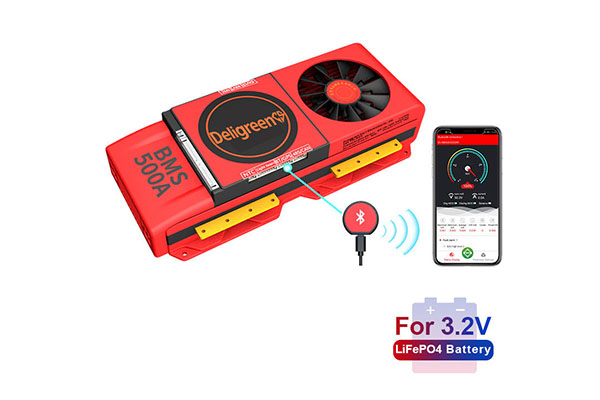
For example, Deligreen’s SEPLOS 16S200A Smart BMS supports energy-consumption balancing with a balancing current of at least 50mA. Its balancing parameters, including starting voltage and voltage difference, can also be configured.
This type of balancing is suitable for battery systems where cell consistency is relatively good and balancing requirements are moderate.
Active Balancing
Active balancing transfers energy from higher-voltage cells to lower-voltage cells instead of dissipating the excess energy as heat.
Depending on the design, active balancing systems may support currents ranging from several hundred milliamps to several amperes. Some high-performance models offer 1A or 2A balancing capabilities.
Active balancing is often suitable for large-capacity battery packs, energy storage systems, and applications requiring more efficient energy management.
How Much BMS Balancing Current Do You Need?
There is no universal balancing current for every lithium battery pack. Several factors should be evaluated before selecting a BMS.
Consider Battery Capacity
Battery capacity is an important reference when estimating balancing requirements.
For example, a small battery pack with relatively consistent cells may work well with a conventional passive balancing circuit. However, a 200Ah or 300Ah energy storage battery may require a stronger balancing capability if noticeable capacity differences develop between cells.
A higher-capacity battery does not automatically require higher balancing current. The actual cell imbalance and expected correction time are equally important.
Evaluate Cell Voltage Differences
The voltage difference between individual cells helps determine whether balancing is necessary.
However, voltage alone does not always represent the actual capacity difference, particularly with LiFePO4 batteries, whose voltage changes relatively little across much of their operating range.
Cell voltage, SOC, capacity consistency, and internal resistance should be evaluated together.
Estimate the Required Balancing Time
A simple calculation can help estimate the required balancing current:
Balancing Current (A) = Capacity Difference (Ah) ÷ Target Balancing Time (h)
For example, if the estimated capacity difference is 5Ah and the target correction time is 10 hours, the theoretical average balancing current is 0.5A.
In practice, the required current may be higher because balancing does not operate continuously at its rated current. Voltage thresholds, temperature limits, and charging conditions can also affect balancing time.
Other Factors to Consider When Selecting BMS Balancing Current
Battery Chemistry and Series Configuration
LiFePO4, lithium-ion, and LTO batteries have different voltage characteristics and operating requirements. The BMS must match the battery chemistry and the number of cells connected in series.
Thermal Management
Passive balancing generates heat through resistors, while active balancing involves additional electronic components. Proper thermal design is important for maintaining reliable operation.
Application Requirements
Residential energy storage, commercial battery systems, electric vehicles, and industrial equipment may have different balancing requirements. The expected operating cycle and maintenance conditions should be considered during BMS selection.
Choose the Right BMS for Your Battery System
Selecting BMS balancing current requires more than comparing current ratings. Battery capacity, cell consistency, balancing technology, thermal conditions, and application requirements all influence the final configuration.
Deligreen provides LiFePO4 battery cells, battery packs, BMS accessories, and energy storage solutions for residential, commercial, and industrial applications. Its BMS configurations can be evaluated according to battery voltage, capacity, series configuration, and system requirements.
For a suitable BMS recommendation, provide your battery chemistry, cell capacity, series count, and application details. This helps determine an appropriate balancing solution for reliable battery operation.