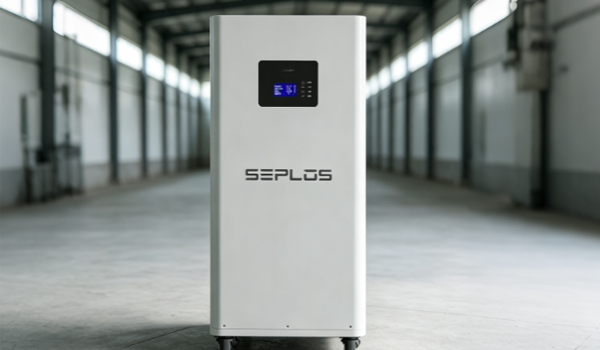
A 48V 100Ah lithium iron phosphate battery is a common high-capacity energy storage battery, often used for solar energy storage, RVs, electric vehicles, backup power supplies, and small energy storage devices. To determine how much electricity a battery pack can store, you cannot look only at the two parameters “48V” and “100Ah.” You also need to calculate the value based on voltage and capacity. Using the commonly stated nominal voltage of 48V, the theoretical energy storage capacity of this battery pack is 48V×100Ah=4800Wh, or 4.8kWh, which is generally understood as approximately 4.8 kilowatt-hours of electricity. It should be noted that when LiFePO4 batteries use 3.2V individual cells, the actual nominal voltage of the battery pack is usually 51.2V. This is because common 48V LiFePO4 batteries use a 16-series configuration, meaning 16 3.2V cells are connected in series, giving 3.2V×16=51.2V. Therefore, if a product is labeled as a “48V 100Ah LiFePO4 battery,” its theoretical energy storage capacity based on the actual nominal voltage of the cells is 51.2V×100Ah=5120Wh, or 5.12kWh, which is approximately 5.12 kilowatt-hours of electricity. This calculation is more consistent with the actual structure of a 16-series LiFePO4 battery.

Calculation Formula
The calculation method for battery energy storage is:
Energy Storage (Wh) = Battery Nominal Voltage (V) × Battery Capacity (Ah)
If calculated according to 48V:
48V×100Ah=4800Wh=4.8kWh
If calculated according to the common 16-series 3.2V LiFePO4 cells:
3.2V×16×100Ah=5120Wh=5.12kWh
Therefore, when purchasing a 48V 100Ah LiFePO4 battery, you should check the nominal voltage and the number of cells connected in series on the product nameplate. You should not determine the actual energy storage capacity solely based on the “48V” label.
What Parameters Determine the Capacity?
What Does 100Ah Represent?
100Ah represents the rated capacity of the battery, and it can also indicate the battery’s ability to provide a certain current for continuous operation. For example, theoretically, a 100Ah battery discharging at 10A can operate continuously for approximately 10 hours; if it discharges at 20A, the theoretical operating time is approximately 5 hours. However, this is only a simple calculation based on the rated capacity. Actual operating time is also affected by factors such as load power, discharge cutoff voltage, battery temperature, BMS settings, and the battery’s own condition. Therefore, it cannot be assumed directly that all devices can fully use the entire 100Ah capacity.
How Are 3.2V Cells Used to Form a 48V Battery?
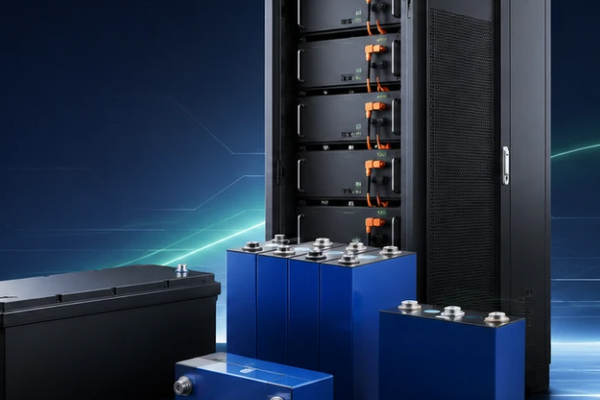
In standard product specifications , the individual cell voltage is 3.2V, the capacity is 100Ah, and an aluminum casing is used. Common 48V-class LiFePO4 batteries use a 16-series configuration:
3.2V×16=51.2V
Here, 51.2V is the nominal voltage of the LiFePO4 battery pack. In the industry, it is still commonly referred to as a “48V battery” or “48V energy storage battery.” Therefore, a 48V 100Ah product may actually correspond to a 51.2V 100Ah specification.
Theoretical Capacity and Actual Usable Capacity Are Different
5.12kWh is the theoretical energy storage capacity and does not mean that the battery will necessarily output 5.12kWh after being connected to a device. During use, batteries generally do not allow the cells to discharge continuously to their absolute limit, and the BMS also provides protection based on parameters such as voltage, current, and temperature. If an approximately 90% usable ratio is used for estimation, the actual usable energy of a 51.2V 100Ah battery is approximately:
5.12kWh×90%=4.61kWh
If the inverter, cables, and other components also cause certain energy losses, the amount of electricity ultimately supplied to AC devices may be further reduced. Therefore, for household electricity use, 5.12kWh can be regarded as the theoretical energy storage capacity of the battery.
How Long Can a 48V 100Ah Battery Be Used?
How long the battery can operate mainly depends on the power of the connected device. The same 48V 100Ah LiFePO4 battery can have significantly different operating times when connected to a 100W device compared with a 1000W device.
Different Device Power Means Different Operating Times
When calculating the theoretical operating time of a device, you can use:
Operating Time (hours) ≈ Battery Energy Storage (Wh) ÷ Device Power (W)
For example, based on 51.2V 100Ah, the theoretical energy storage capacity of the battery is 5120Wh.
If connected to a 100W device: 5120Wh÷100W=51.2 hours
If connected to a 500W device: 5120Wh÷500W=10.24 hours
If connected to a 1000W device: 5120Wh÷1000W=5.12 hours
If connected to a 2000W device: 5120Wh÷2000W=2.56 hours
These figures are theoretical calculations. During actual use, factors such as inverter efficiency, cable losses, and the fact that the battery cannot be completely discharged must also be considered. Therefore, the actual operating time is usually shorter than the calculated result.
Temperature Also Affects Actual Performance
The operating temperature of this type of LiFePO4 battery can generally reach -20°C to 55°C, providing good high-temperature performance and resistance to high temperatures. However, battery capacity is not exactly the same under all temperature conditions. In particular, under low-temperature conditions, the battery’s discharge performance may change. Therefore, when calculating the operating time of outdoor equipment in winter, a certain amount of reserve should be allowed.
Frequently Asked Questions
Q: How much electricity can a 48V 100Ah LiFePO4 battery actually store?
A: If simply calculated according to 48V, the energy storage capacity is 4.8kWh, or 4.8 kilowatt-hours of electricity. However, if the product uses 3.2V LiFePO4 cells in a 16-series configuration, the actual nominal voltage is usually 51.2V, resulting in a theoretical energy storage capacity of 5.12kWh, or approximately 5.12 kilowatt-hours of electricity.
Q: Why does the product say 48V when the actual voltage is 51.2V?
A: This is because “48V” is a commonly used voltage class designation. The nominal voltage of a LiFePO4 cell is approximately 3.2V. Sixteen cells connected in series produce 51.2V, so many products are referred to as 48V LiFePO4 batteries.
Q: Does 100Ah always mean that 100Ah can be used?
A: 100Ah is the rated capacity of the battery. The actual usable capacity is affected by the depth of discharge, operating temperature, current level, BMS parameters, and battery condition. Therefore, the actual output capacity is usually not exactly the same as the theoretical rated value.
Q: What devices is this battery suitable for?
A: A 48V 100Ah LiFePO4 battery has a relatively large capacity and can be used for solar energy storage, household backup power, RV power supplies, electric equipment, and other 48V-class energy storage applications. Whether it is suitable for a specific device also depends on the device’s input voltage, current requirements, and power level.
At present, it can be understood that the theoretical energy storage capacity of a 48V 100Ah LiFePO4 battery is generally approximately 4.8kWh. If the battery uses 16-series 3.2V cells, its actual nominal voltage is 51.2V, and its theoretical energy storage capacity is approximately 5.12kWh. This value can be used as a basis for battery selection and estimation, but it does not mean that the device can use all of the stored electricity under all conditions. The actual usable capacity is affected by factors such as depth of discharge, load power, ambient temperature, battery management system, and inverter efficiency. When selecting a battery, it is recommended to confirm the product’s nominal voltage, rated capacity, maximum continuous discharge current, operating temperature range, and protection functions. At the same time, the required battery capacity should be calculated according to the actual power of the equipment, with a certain safety margin reserved. For applications such as household energy storage, solar systems, RVs, and backup power supplies, properly matching the battery, inverter, and load can improve system stability and operating efficiency. Only by combining the specific operating conditions with the calculation can you more accurately determine how much electricity the battery can store and how long it can supply power to the equipment.