In the design process of a DIY battery box, terminals, although small in size, play a critical role in electrical connection and power transmission. Proper terminals can reduce contact resistance, improve current efficiency, and enhance overall safety and structural stability. Different applications have different requirements for terminal materials, specifications, and connection types. Small devices tend to focus more on space efficiency and installation convenience, while high-power systems place greater emphasis on current-carrying capacity and long-term reliability. Understanding how to select terminals for a DIY battery box helps build a more stable and efficient power supply system.
Main Functions of DIY Battery Box Terminals
Terminals act as a bridge between the battery and external circuits and are a key factor affecting power supply quality.
Achieving Stable Current Transmission
The primary function of terminals is to ensure smooth power delivery to the load.
- Transfer battery energy to the device with minimal loss.
- Maintain stable current output during continuous operation.
- Reduce energy loss and heat generation caused by contact resistance.
A well-designed conductive structure improves overall efficiency and system stability of the DIY battery box.
Providing Convenient Connection Methods
Different terminal structures can meet various installation and maintenance needs, making battery box usage more flexible. They support quick plug-and-play operation, simplify battery replacement and maintenance, reduce disassembly steps, and improve user experience. They also streamline the DIY assembly process, making it easier for users to build the battery box. Choosing the right terminal type can make the DIY battery box more convenient to use.
Common Types of DIY Battery Box Terminals
Based on structure and application methods, terminals can be divided into the following categories.
Spring-Loaded Battery Terminals
This type is commonly used in small electronic devices due to its compact structure and ease of use.
- Uses spring pressure to maintain stable contact.
- Simple installation, suitable for quick assembly scenarios.
- Commonly used for AA, AAA, and other standard battery sizes.
It is suitable for low-power devices and basic power supply needs.
Screw-Fixed Terminals
This structure is more suitable for systems requiring higher connection reliability.
- Uses screws to achieve a firm connection.
- Larger contact area and strong anti-loosening capability.
- Suitable for long-term fixed installations.
It is commonly used in energy storage systems, power tools, and industrial applications.
Plug-and-Play Terminals
This type emphasizes modularity and maintenance efficiency.
- Supports quick connection and disconnection.
- Facilitates system expansion and module replacement.
- Suitable for scalable DIY designs.
It improves maintenance efficiency and system upgrade convenience.
Key Factors in Choosing DIY Battery Box Terminals
Terminal selection should be based on both electrical parameters and actual operating conditions.
Selecting Based on Current Level
Different loads have significantly different current-carrying requirements.
- Low-power devices can use basic terminal specifications.
- High-power applications require high-current-rated models.
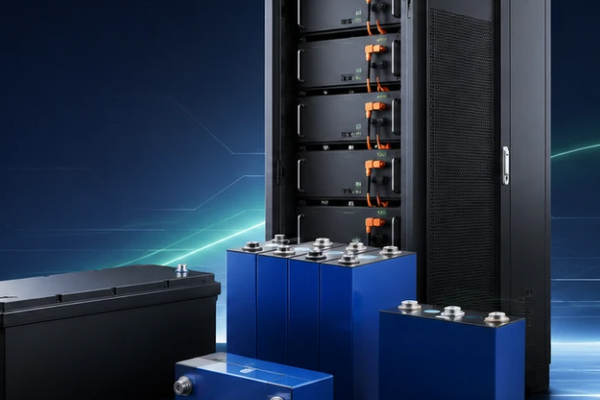
- Energy storage systems should prioritize continuous load capacity.
Proper matching helps prevent overheating and improves safety.
Matching Connection Method to Battery Structure
Battery form directly affects terminal design. Cylindrical batteries require stable and accurate positive/negative contact alignment; battery packs focus more on series/parallel conductivity and layout efficiency; modular designs emphasize ease of disassembly and expandability. Selecting the appropriate solution based on structure improves overall assembly quality.
Selecting Materials Based on Environmental Conditions
Material performance determines long-term usage behavior.
- Copper offers excellent electrical conductivity.
- Nickel plating improves oxidation resistance.
- Structural strength affects long-term stability.
Appropriate materials help maintain stable electrical connections.
Material Requirements for DIY Battery Box Terminals
During long-term operation, terminals must withstand both electrical and mechanical loads, making material performance especially important.
Electrical Conductivity
Conductivity directly affects energy transmission efficiency.
- Reduce contact resistance to minimize losses.
- Maintain stable current output.
- Control heat generation to improve safety.
High conductivity helps improve overall system efficiency.
Corrosion Resistance
Environmental factors can affect metal contact quality.
- Suppress oxidation to maintain stable contact.
- Adapt to humid or complex environments.
- Extend service life and reduce maintenance needs.
Good corrosion resistance improves long-term reliability.
Mechanical Strength
Structural strength determines durability and stability.
- Resist vibration and external forces.
- Reduce wear caused by frequent plugging and unplugging.
- Maintain long-term connection stability.
Higher strength improves reliability in demanding environments.
When selecting terminals, a comprehensive evaluation should be made based on current-carrying capacity, battery structure, connection method, material properties, and actual operating environment. Proper parameter matching can effectively improve the stability and efficiency of power transmission while enhancing system safety and durability. A well-planned terminal configuration helps ensure that the DIY battery box maintains stable and reliable performance under various application conditions.